
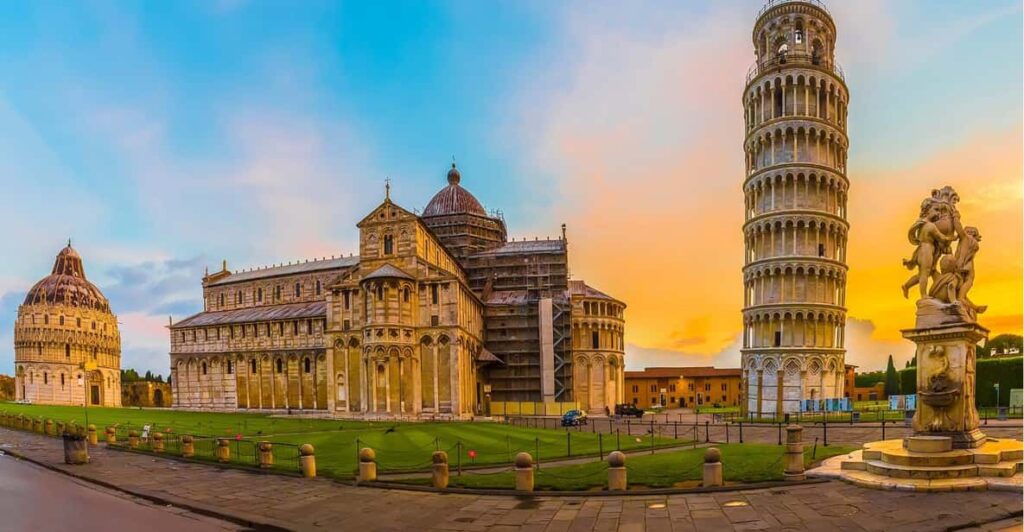
The Tower of Pisa is more than one of the world’s most famous landmarks—it is a living monument to history, art, science, and human determination. Standing proudly in the heart of Pisa, Italy, this iconic structure has watched centuries pass by, from medieval times to the modern world. Its graceful lean, once seen as a tragic flaw, has become a symbol of uniqueness and resilience. To walk through history at the Tower of Pisa is to step into a story that has been unfolding for over eight hundred years.
Millions of visitors come to Pisa every year to admire the tower, climb its winding steps, and experience the magic of a place where time seems to stand still. Yet beyond the photographs and postcards lies a deeper story of ambition, struggle, and triumph that shaped this remarkable monument.
The Birth of a Medieval Dream
Construction of the Tower of Pisa began in 1173 during the height of Pisa’s power as a maritime republic. The city sought to create a grand religious complex that would reflect its wealth, devotion, and cultural importance. The tower was designed to serve as the bell tower for the Cathedral of Santa Maria Assunta, located in the Piazza dei Miracoli, or Square of Miracles.
Built from gleaming white marble, the tower was meant to rise straight and tall. However, after just a few years, the structure began to lean because the ground beneath it was too soft to support the weight. Construction was halted for nearly a century, allowing the soil to settle. When work resumed, architects tried to correct the tilt, unknowingly creating the tower’s iconic curved shape.
A Masterpiece of Romanesque Architecture
The Tower of Pisa is a stunning example of Romanesque design. Standing approximately 56 meters tall, it consists of eight levels, including the bell chamber at the top. Each level is adorned with graceful columns and arches that give the tower a sense of elegance and harmony.
Inside, a spiral staircase with nearly 300 steps winds upward. As visitors climb, they can feel the tower’s tilt beneath their feet, making the experience both thrilling and unforgettable. At the top, panoramic views of Pisa and the surrounding Tuscan countryside provide a breathtaking reward.
The Lean That Changed Everything
The tower’s lean is what makes it famous around the world. Over centuries, the tilt gradually worsened, causing concern that the structure might collapse. By the late 20th century, the lean had reached a dangerous level.
A major restoration project was launched to stabilize the tower. Engineers from around the world worked together to reduce the tilt by removing soil and reinforcing the foundation. Their efforts were successful, ensuring that the Tower of Pisa would remain standing for generations to come.
A Place of Legends and Learning
The Tower of Pisa is closely associated with Galileo Galilei, who was born in the city. According to legend, he conducted experiments from the top of the tower to study gravity. While historians debate the story, it adds to the tower’s mystical charm.
The Piazza dei Miracoli
The tower stands alongside the Cathedral, Baptistery, and Camposanto in the Piazza dei Miracoli, a UNESCO World Heritage Site. Together, these monuments represent centuries of religious devotion and artistic achievement.
A Timeless Journey
To walk through history at the Tower of Pisa is to connect with the past in a meaningful way. Standing tall while leaning, the tower remains one of the world’s greatest wonders and a symbol of human resilience.