
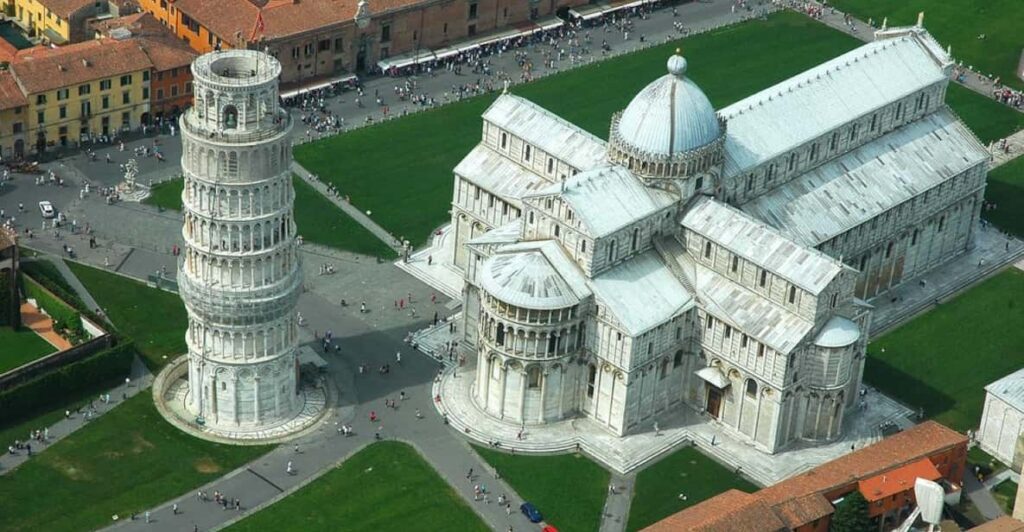
The Tower of Pisa is one of the most recognizable monuments in the world, admired for its graceful lean, striking beauty, and rich history. Rising above the ancient city of Pisa in Tuscany, Italy, this iconic structure seems to exist outside of time. For more than eight centuries, it has watched empires rise and fall, welcomed travelers from every corner of the globe, and remained a symbol of human creativity and resilience. To stand before the Tower of Pisa is to feel as though time itself has slowed, allowing you to connect with centuries of history in a single moment.
More than just a bell tower, the Tower of Pisa is a living story. What began as an ambitious architectural project evolved into one of the world’s greatest wonders. Its famous lean, once considered a failure, is now celebrated as a mark of uniqueness and charm.
A Vision from the Middle Ages
Construction of the Tower of Pisa began in 1173, when Pisa was a powerful maritime republic. The city wanted to display its wealth and devotion through a magnificent religious complex in what is now known as the Piazza dei Miracoli, or Square of Miracles. The tower was designed to serve as the bell tower for the Cathedral of Santa Maria Assunta.
Built from white and gray marble, the tower was meant to stand straight and tall. However, after only three levels were completed, the structure began to sink because the foundation was laid on soft, unstable soil. Construction stopped for nearly a century, allowing the ground to settle. When work resumed, architects tried to correct the tilt, unintentionally giving the tower its iconic curved shape.
Architectural Grace
The Tower of Pisa stands approximately 56 meters tall and consists of eight levels, including the bell chamber at the top. Each level is decorated with elegant arches and columns that reflect the Romanesque style. The marble exterior glows in the Tuscan sunlight, creating a magical atmosphere.
Inside, a spiral staircase of nearly 300 steps leads to the summit. As visitors climb, they can feel the tower’s tilt beneath their feet. At the top, breathtaking views of Pisa, the Arno River, and the surrounding countryside await.
The Lean That Defined a Legend
The tower’s lean gradually increased over centuries, raising concerns about its stability. By the late 20th century, the tilt had become dangerous.
A major restoration project brought together engineers from around the world. Through careful soil removal and foundation reinforcement, they reduced the tilt and ensured the tower’s safety. Today, it stands securely, still leaning proudly.
A Place of Culture and Science
The Tower of Pisa is associated with Galileo Galilei, who was born in Pisa. Legend says he conducted experiments from the tower, adding to its mystique.
A Timeless Wonder
The Tower of Pisa continues to inspire millions. Standing tall while leaning, it remains a place where time truly stands still.