
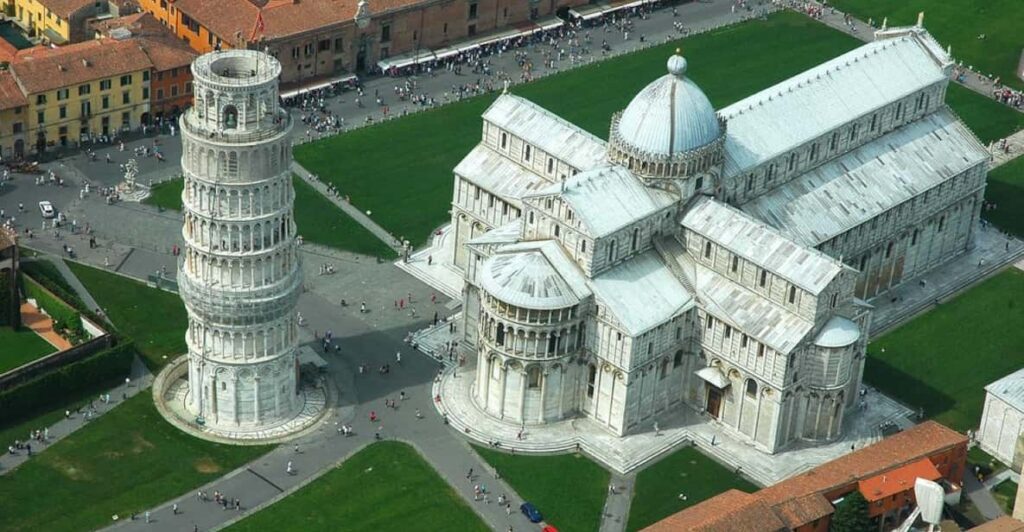
The Leaning Tower of Pisa is one of the most famous structures in the world, admired for its beauty, unusual tilt, and remarkable endurance. While much attention is given to the tower’s lean, its materials are just as important to its story. Built more than 800 years ago, the tower was constructed using carefully chosen stones, mortar, and metals that reflected the technology and craftsmanship of medieval Italy. These materials played a crucial role in both the tower’s problems and its survival.
Marble: The Main Building Stone
The primary material used to build the Tower of Pisa is marble, especially white and gray marble from quarries in Tuscany and nearby regions. Marble was chosen because it is:
- Strong and durable
- Resistant to weathering
- Beautiful and easy to carve
The tower’s outer walls, columns, arches, and decorative details are all made from marble. Its bright white appearance comes from this stone, which reflects sunlight and gives the monument a glowing look.
Limestone and Other Stones
In addition to marble, builders used limestone and other local stones for the inner walls and foundation layers. Limestone is lighter and easier to cut than marble, making it useful for parts that did not need decorative finishes.
Mortar
The stones were held together using lime-based mortar, a mixture of lime, sand, and water. This mortar was flexible, allowing the structure to move slightly as the ground shifted.
Lead and Iron
Metal elements such as lead and iron were used in small amounts for clamps, reinforcements, and later stabilization.
Foundation Materials
The foundation consists of stone blocks laid on soft soil, which caused the lean.
Bells and Bronze
The seven bells are made of bronze, an alloy of copper and tin.
Preservation
Modern engineers continue to study and protect these ancient materials.
Conclusion
The Tower of Pisa stands today because of the strength, beauty, and resilience of the materials chosen by medieval builders.
If you’d like, I can simplify this or make it more technical.