
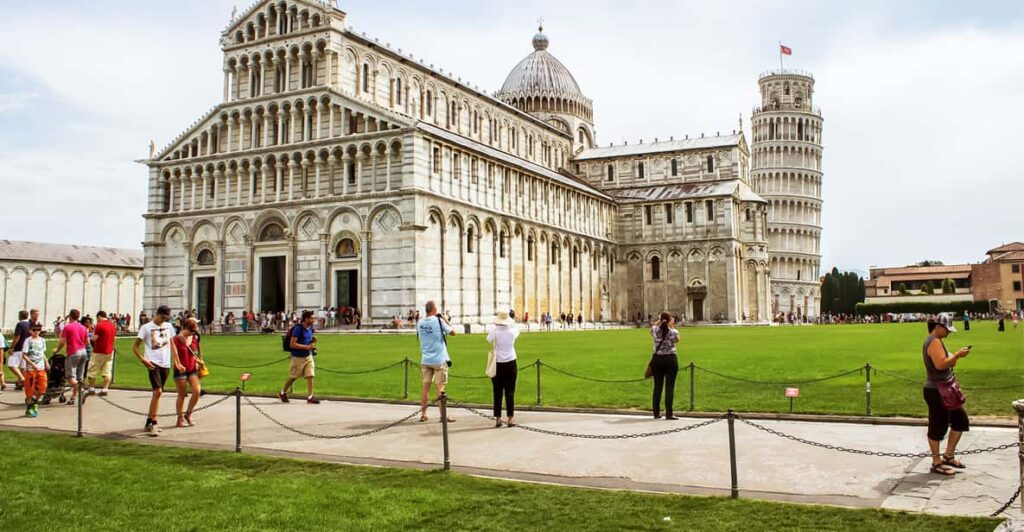
The Leaning Tower of Pisa is one of the most famous buildings in the world, known for its dramatic tilt and timeless beauty. However, what many people admire today was originally a serious engineering failure. The tower was never meant to lean. Its problems began at the planning stage and continued through construction, resulting in a structure that has struggled against gravity for more than 800 years. The story of the Tower of Pisa is a powerful lesson in what can go wrong when engineering mistakes are made.
1. Choosing the Wrong Location
The first major mistake was selecting an unstable building site. The tower was built on soft ground composed of clay, sand, and silt. This type of soil compresses unevenly under heavy loads. The builders did not conduct proper soil tests because medieval engineers lacked modern geotechnical knowledge.
2. Shallow Foundation
The foundation of the tower is only about three meters deep. For a massive stone structure weighing over 14,000 tons, this depth was far too shallow. The weak foundation could not distribute the weight evenly.
3. Poor Soil Analysis
Medieval builders did not understand how soil behaves under pressure. They assumed the ground was stable simply because it appeared firm on the surface.
4. No Drainage Planning
The site is affected by underground water. Changes in the water table cause soil movement, which increased the lean.
5. Delayed Corrections
Instead of rebuilding, builders tried to “fix” the lean by altering the upper floors, which made the structure more unstable.
6. Weight Distribution Errors
The tower’s heavy marble caused uneven pressure on the foundation.
7. Ignoring Early Warning Signs
The lean was visible after the third floor, but construction continued later.
8. Lack of Structural Reinforcement
No internal supports were added.
9. Failed Past Repairs
Some early repair attempts made the lean worse.
10. Overconfidence
The builders believed stone strength alone was enough.
Conclusion
The Leaning Tower of Pisa is a beautiful reminder that even great ambition must be matched with careful engineering.
If you’d like, I can simplify or turn this into a presentation.