Travel Place

Timed Entrance to Leaning Tower Pisa

History of the Leaning Tower of Pisa

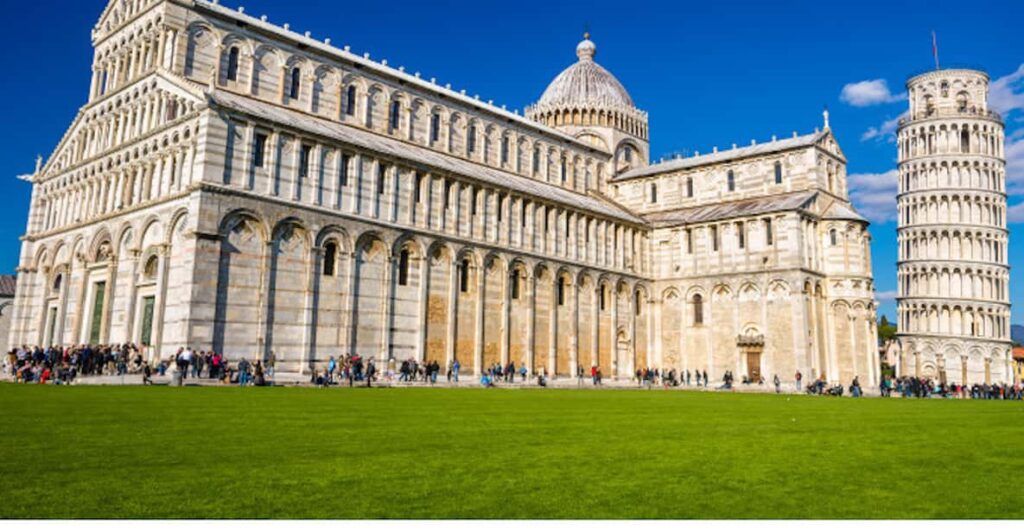
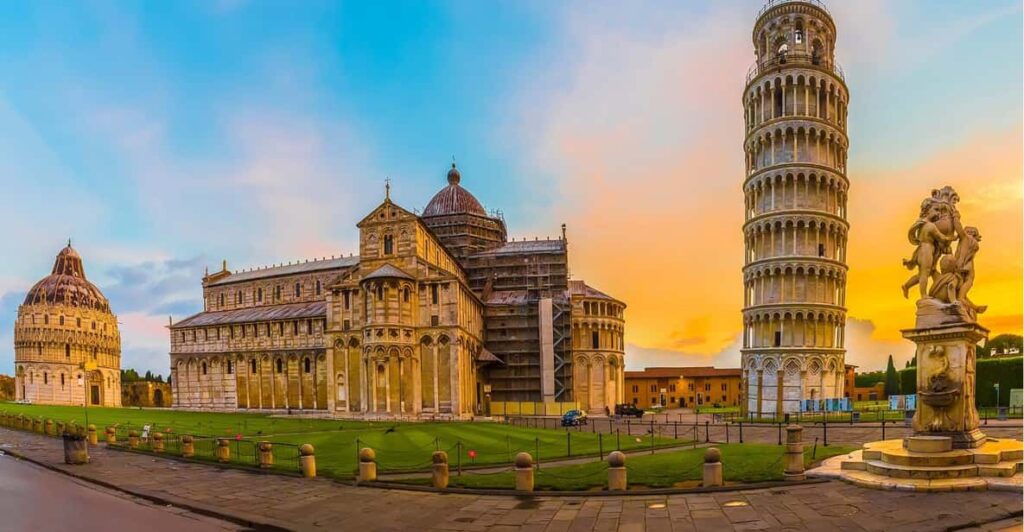
The Leaning Tower of Pisa is one of the most famous monuments in the world. Located in the city of Pisa, Italy, it is best known for its unintended tilt, which makes it appear as though it is about to fall. Despite this flaw, the tower has stood for more than eight centuries and has become a symbol of architectural beauty, human error, and engineering perseverance. Its long history reflects the political, cultural, and scientific development of medieval and modern Europe. Origins of the Tower The Leaning Tower of Pisa was built as the bell tower (campanile) of the Cathedral of Santa Maria Assunta, part of a religious complex known as the Piazza dei Miracoli (Square of Miracles). Construction began in 1173, during a period when Pisa was a powerful maritime republic. The city was wealthy from trade and wanted monuments that showed its status and religious devotion. The original architect is still debated, but many historians believe the design was by Bonanno Pisano or Guglielmo di Innsbruck. The tower was planned to be straight and vertical, but the builders unknowingly laid the foundation on soft, unstable soil made of clay, sand, and shells. The foundation was only about three meters deep, far too shallow for such a heavy stone structure. The Beginning of the Lean After the first three floors were completed around 1178, workers noticed that the tower had begun to lean toward the south. The ground beneath one side of the foundation was sinking faster than the other. This created the tilt that the tower is famous for today. Construction was halted for nearly 100 years because of wars between Pisa and neighboring city-states such as Genoa, Lucca, and Florence. Surprisingly, this delay helped prevent the tower from collapsing. During this time, the soil had time to settle and compact, giving the structure more stability. Continued Construction and Design Changes Work resumed in 1272 under the architect Giovanni di Simone. To compensate for the tilt, builders made the upper floors slightly taller on the leaning side. This gave the tower a curved shape, often described as a “banana shape.” Three more stories were added before construction stopped again due to military defeat in 1284. Finally, in 1372, the tower was completed with the addition of the bell chamber, designed by Tommaso di Andrea Pisano. The tower reached a height of about 56 meters (183 feet) on the taller side and 54.7 meters (179 feet) on the lower side. It contains 294 steps leading to the top. The Bells of the Tower The Leaning Tower houses seven bells, each corresponding to a musical note. The largest bell, called L’Assunta, was cast in 1655 and weighs over 3.5 tons. For many years, the bells were not rung because their vibrations might have worsened the tilt. Today, they are rung only on special occasions. Scientific Importance The tower is also associated with the famous scientist Galileo Galilei, who was born in Pisa in 1564. According to legend, Galileo dropped two spheres of different weights from the top of the tower to prove that objects fall at the same speed regardless of mass. Although historians debate whether this experiment truly happened, the story has made the tower a symbol of scientific discovery. Attempts to Save the Tower By the 20th century, the tilt had become dangerous. The tower leaned more than 5 degrees, and experts feared it might collapse. In 1990, the tower was closed to the public for safety reasons. An international team of engineers began a massive restoration project. They used several methods, including: After 11 years of work, the tilt was reduced by about 45 centimeters, and the tower was stabilized. In 2001, it was reopened to visitors. A UNESCO World Heritage Site In 1987, the Leaning Tower of Pisa, along with the surrounding cathedral complex, was declared a UNESCO World Heritage Site. It is considered one of the finest examples of Romanesque architecture in Europe and attracts millions of tourists each year. Cultural Symbol Today, the Leaning Tower is more than just a building—it is a global icon. It represents how mistakes can become masterpieces and how human creativity and determination can preserve history. Visitors from around the world take photos pretending to “hold up” the tower, celebrating its unique charm. Conclusion The Leaning Tower of Pisa is a remarkable blend of history, architecture, science, and culture. What began as a construction error has become one of the most beloved monuments on Earth. Standing for over 800 years, the tower reminds us that even imperfect creations can achieve greatness and inspire generations. Book Now

History of the Leaning Tower of Pisa Read More »

Tower of pisa facts

The Tower of Pisa: A True Italian Treasure

The Tower of Pisa is not just a famous monument—it is a story of survival written in stone and marble. For more than eight centuries, this iconic structure has stood in the heart of Pisa, Italy, leaning gracefully while defying gravity, time, and countless challenges. What began as a simple bell tower for a cathedral has become one of the world’s most admired landmarks. Its continued existence is a powerful reminder that even the greatest obstacles can be overcome through patience, innovation, and determination. From wars and natural disasters to engineering failures and political changes, the Tower of Pisa has endured it all. Each generation has faced the question: Can it be saved? And each time, the answer has been yes. A Monument Born in Ambition Construction of the Tower of Pisa began in 1173, during a time when Pisa was a wealthy and powerful maritime republic. The city wanted to showcase its success through magnificent architecture. The tower was designed as the bell tower for the Cathedral of Santa Maria Assunta, part of the beautiful religious complex now known as the Piazza dei Miracoli, or Square of Miracles. Built from white and gray marble, the tower followed the Romanesque style, featuring elegant arches, decorative columns, and detailed carvings. It was meant to stand tall and perfectly straight—a proud symbol of Pisa’s glory. The Unexpected Lean Just five years into construction, after the first three levels were completed, builders noticed something alarming: the tower was leaning. The ground beneath the foundation was too soft, made of clay, sand, and silt. The heavy marble structure began to sink on one side. Instead of abandoning the project, the builders paused construction. This delay, lasting nearly a century, allowed the soil to settle and may have prevented the tower from collapsing early in its life. When work resumed, architects tried to compensate for the tilt by building the upper levels slightly angled in the opposite direction. This created the tower’s unique curved shape. Centuries of Uncertainty Over the centuries, the lean continued to increase slowly. Earthquakes, storms, and changes in the surrounding soil added to the danger. By the 20th century, experts feared that the tower might fall. In 1990, the tower was closed to the public, and a massive international effort began to save it. Engineers used modern technology to study the structure and its foundation. They removed soil from beneath the higher side, added counterweights, and strengthened the base. These careful steps reduced the tilt and stabilized the tower. A Living Legend The Tower of Pisa is also linked to the famous scientist Galileo Galilei, who was born in Pisa. book now

The Tower of Pisa: A True Italian Treasure Read More »

Why was the Leaning Tower of Pisa built

The Tower of Pisa: A Dream Come True

For travelers around the world, seeing the Tower of Pisa is a dream come true. This iconic monument, famous for its graceful lean and gleaming marble beauty, has captured the imagination of millions for more than eight centuries. Rising in the heart of Pisa, Italy, the tower stands not only as a symbol of architectural brilliance but also as a testament to human perseverance. What began as a simple bell tower has become one of the most beloved landmarks on Earth. To stand before the Tower of Pisa is to feel history, wonder, and inspiration all at once. It is a place where dreams meet reality and where the past continues to live in the present. A Vision Born in Medieval Pisa Construction of the Tower of Pisa began in 1173, during the height of Pisa’s power as a maritime republic. The city wanted to demonstrate its wealth, devotion, and artistic skill by building a grand bell tower for the Cathedral of Santa Maria Assunta. This cathedral complex, located in the Piazza dei Miracoli (Square of Miracles), includes the Baptistery and Camposanto, forming one of the most beautiful religious sites in Europe. The tower was designed in the Romanesque style and built using white and gray marble. Its arches, columns, and intricate carvings reflected the craftsmanship of medieval Italy. The original plan was for a tall, perfectly vertical structure that would rise proudly above the city. When a Flaw Became a Wonder Shortly after the first three levels were completed, the tower began to lean due to the soft soil beneath its foundation. Instead of abandoning the project, builders adapted, unknowingly creating one of the world’s greatest architectural icons. A Journey Upward With nearly 300 steps inside, visitors climb through history to the bell chamber, enjoying breathtaking views of Pisa and Tuscany. A Symbol of Hope Today, the Tower of Pisa continues to inspire the world—a true dream come true for all who see it. book now

The Tower of Pisa: A Dream Come True Read More »

Campo dei Miracoli

The Tower of Pisa: A Story of Survival

The Tower of Pisa is not just a famous monument—it is a story of survival written in stone and marble. For more than eight centuries, this iconic structure has stood in the heart of Pisa, Italy, leaning gracefully while defying gravity, time, and countless challenges. What began as a simple bell tower for a cathedral has become one of the world’s most admired landmarks. Its continued existence is a powerful reminder that even the greatest obstacles can be overcome through patience, innovation, and determination. From wars and natural disasters to engineering failures and political changes, the Tower of Pisa has endured it all. Each generation has faced the question: Can it be saved? And each time, the answer has been yes. A Monument Born in Ambition Construction of the Tower of Pisa began in 1173, during a time when Pisa was a wealthy and powerful maritime republic. The city wanted to showcase its success through magnificent architecture. The tower was designed as the bell tower for the Cathedral of Santa Maria Assunta, part of the beautiful religious complex now known as the Piazza dei Miracoli, or Square of Miracles. Built from white and gray marble, the tower followed the Romanesque style, featuring elegant arches, decorative columns, and detailed carvings. It was meant to stand tall and perfectly straight—a proud symbol of Pisa’s glory. The Unexpected Lean Just five years into construction, after the first three levels were completed, builders noticed something alarming: the tower was leaning. The ground beneath the foundation was too soft, made of clay, sand, and silt. The heavy marble structure began to sink on one side. Instead of abandoning the project, the builders paused construction. This delay, lasting nearly a century, allowed the soil to settle and may have prevented the tower from collapsing early in its life. When work resumed, architects tried to compensate for the tilt by building the upper levels slightly angled in the opposite direction. This created the tower’s unique curved shape. Centuries of Uncertainty Over the centuries, the lean continued to increase slowly. Earthquakes, storms, and changes in the surrounding soil added to the danger. By the 20th century, experts feared that the tower might fall. In 1990, the tower was closed to the public, and a massive international effort began to save it. Engineers used modern technology to study the structure and its foundation. They removed soil from beneath the higher side, added counterweights, and strengthened the base. These careful steps reduced the tilt and stabilized the tower. A Living Legend The Tower of Pisa is also linked to the famous scientist Galileo Galilei, who was born in Pisa. According to legend, he dropped objects from the tower to test gravity, adding to its historical importance. Standing Strong Today, the Tower of Pisa stands safe and secure, continuing its story of survival. It welcomes millions of visitors each year, inspiring awe and reminding the world that even the most fragile wonders can endure through time. book now

The Tower of Pisa: A Story of Survival Read More »

Leaning Tower and Cathedral Skip

The Tower of Pisa: Beauty in Motion

The Tower of Pisa is not just a monument—it is beauty in motion, a living symbol of history, art, and human resilience. Famous for its gentle lean and radiant white marble, this iconic structure has fascinated the world for more than eight centuries. Rising in the heart of Pisa, Italy, the tower appears to move even while standing still, as if frozen in a graceful dance with gravity. What began as a simple architectural project has become one of the most admired landmarks on Earth. To witness the Tower of Pisa is to see beauty that feels alive. Its tilt, once feared as a fatal flaw, is now celebrated as a sign of uniqueness and charm. The tower’s “motion” tells a story of time, struggle, and survival. A Dream Born in Medieval Pisa Construction of the Tower of Pisa began in 1173, during the height of Pisa’s power as a maritime republic. The city sought to display its wealth, faith, and artistic brilliance by building a grand bell tower for the Cathedral of Santa Maria Assunta. This sacred complex, located in the Piazza dei Miracoli (Square of Miracles), also includes the Baptistery and Camposanto, forming one of the most beautiful religious sites in the world. The tower was designed in the Romanesque style and built from white and gray marble. Its elegant arches, decorative columns, and carved details reflected the craftsmanship of medieval Italy. The original plan was for a tall, straight structure that would rise proudly above the city. The Lean That Changed Everything Shortly after the first three levels were completed, builders noticed the tower was beginning to lean. The soft soil beneath the foundation—made of clay, sand, and silt—could not support the heavy marble structure. One side began to sink, creating the famous tilt. Construction was halted for nearly 100 years. When work resumed, architects attempted to correct the lean by adjusting the upper floors. Instead, they created the tower’s signature curve, giving it the appearance of graceful motion. A Masterpiece of Marble The Tower of Pisa stands approximately 56 meters tall and consists of eight levels, including the bell chamber. Each level is decorated with elegant arches and columns that reflect the Romanesque style. The marble exterior glows under the Tuscan sun, making the tower shimmer like a living sculpture. Inside, a spiral staircase with nearly 300 steps leads visitors upward. As you climb, you can feel the gentle tilt beneath your feet, adding to the sense that the tower is alive. At the top, breathtaking views of Pisa and the countryside await. Engineering the Impossible By the late 20th century, the lean had become dangerous. Engineers stabilized the tower by removing soil from beneath the higher side and reinforcing the foundation. These efforts preserved its tilt while ensuring safety. A Living Symbol The Tower of Pisa continues to inspire the world as beauty in motion—standing, leaning, and living through history. book now

The Tower of Pisa: Beauty in Motion Read More »

Tower of pisa details facts

The Tower of Pisa: A World Wonder

The Tower of Pisa is one of the greatest wonders of the world, admired for its unique beauty, fascinating history, and remarkable survival. Rising gracefully in the heart of Pisa, Italy, this iconic structure is instantly recognizable for its gentle lean and shining white marble. For more than eight centuries, the Tower of Pisa has captured the imagination of travelers, historians, architects, and engineers alike. What began as a simple bell tower has become a global symbol of creativity, resilience, and human achievement. To see the Tower of Pisa is to witness a miracle of architecture and perseverance. Its famous tilt, once considered a serious flaw, is now the very feature that makes it a world wonder. A Vision from Medieval Pisa Construction of the Tower of Pisa began in 1173, during the height of Pisa’s power as a maritime republic. The city wanted to display its wealth, faith, and artistic excellence through a grand religious complex. The tower was designed as the bell tower for the Cathedral of Santa Maria Assunta, located in the Piazza dei Miracoli, also known as the Square of Miracles. Built from white and gray marble in the Romanesque style, the tower featured elegant arches, decorative columns, and detailed carvings. The original plan was for a tall, perfectly vertical structure that would rise proudly above the city. The Lean That Changed History Soon after the first three levels were completed, the tower began to lean because of the soft, unstable soil beneath its foundation. The ground consisted of clay, sand, and silt, which could not support the heavy marble structure. One side of the tower began to sink. Construction was halted for nearly 100 years, allowing the soil to settle. When work resumed, architects tried to correct the lean by adjusting the upper floors. Instead, they created the tower’s signature curved shape. Over time, the lean became more pronounced, turning a mistake into a defining feature. Architectural Brilliance The Tower of Pisa stands about 56 meters tall and is composed of eight levels, including the bell chamber at the top. Each level is decorated with graceful arches and columns that reflect the Romanesque style. The white marble exterior glows in the sunlight, creating a stunning contrast against the blue Tuscan sky. Inside, a spiral staircase with nearly 300 steps leads to the summit. As you climb, you can feel the gentle tilt beneath your feet, making the experience thrilling. From the top, visitors enjoy panoramic views of Pisa and the surrounding countryside. Engineering Triumph By the 20th century, the tower’s lean had become dangerous. Engineers from around the world worked together to save it. Between 1990 and 2001, the structure was stabilized by removing soil from beneath the higher side and reinforcing the foundation. These efforts reduced the tilt and ensured the tower’s safety for future generations. Legends and Legacy The Tower of Pisa is linked to Galileo Galilei, who was born in the city. According to legend, he conducted gravity experiments from the tower. A Global Treasure Today, the Tower of Pisa is a UNESCO World Heritage Site and a true world wonder. Standing tall while leaning, it continues to inspire awe and admiration across the globe. book now

The Tower of Pisa: A World Wonder Read More »

Timed Entrance to Leaning Tower Pisa

The Tower of Pisa: Where the Past Lives

The Tower of Pisa is not just a monument—it is a living story where the past continues to breathe through marble and stone. Rising gracefully in the historic city of Pisa, Italy, this world-famous structure is instantly recognizable for its gentle lean and shining white exterior. For more than eight centuries, the Tower of Pisa has stood as a powerful symbol of history, resilience, and artistic brilliance. It is a place where time seems to slow, and where every visitor can feel the echoes of centuries gone by. To stand before the Tower of Pisa is to connect with a remarkable past. What began as a bold medieval vision has become one of the most beloved landmarks on Earth. Its famous tilt, once feared as a failure, is now admired as the very feature that makes it unique. A Vision from Medieval Pisa Construction of the Tower of Pisa began in 1173, during a period when Pisa was one of the most powerful maritime republics in Italy. The city sought to express its wealth, devotion, and cultural strength through a grand religious complex. The tower was designed as the bell tower for the Cathedral of Santa Maria Assunta, located in the Piazza dei Miracoli, also known as the Square of Miracles. Built from white and gray marble, the tower followed the Romanesque architectural style. Elegant arches, decorative columns, and detailed carvings reflected the artistic excellence of the time. The original plan was for a tall, perfectly straight structure that would stand proudly as a symbol of Pisa’s glory. The Lean That Changed Destiny Shortly after the first three levels were completed, builders noticed that the tower was beginning to lean. The soil beneath the foundation was soft and unstable, made of clay, sand, and silt. The heavy marble structure caused one side to sink. Construction was halted for nearly 100 years, allowing the ground to settle. When work resumed, architects attempted to correct the lean by adjusting the design of the upper floors. Instead of fixing the problem, they created the tower’s graceful curve, making the lean even more noticeable. Over time, what was once a flaw became the tower’s defining feature. A Masterpiece of Marble The Tower of Pisa stands approximately 56 meters tall and consists of eight levels, including the bell chamber at the top. Each level is decorated with elegant arches and columns that reflect the Romanesque style. The white marble exterior glows under the Tuscan sun, creating a magical sight against the blue sky. Inside, a spiral staircase with nearly 300 steps leads to the summit. As visitors climb, they can feel the gentle tilt beneath their feet, making the journey exciting and unforgettable. At the top, breathtaking views of Pisa, the Arno River, and the surrounding countryside await. Engineering That Preserved History By the late 20th century, the tower’s lean had become dangerous. In 1990, it was closed for restoration. Engineers from around the world worked together to stabilize the structure. They carefully removed soil from beneath the higher side and reinforced the foundation, reducing the tilt and securing the tower for future generations. A Place of Legend The Tower of Pisa is associated with Galileo Galilei, who was born in Pisa. According to legend, he conducted gravity experiments from the tower. A Living Past Today, the Tower of Pisa remains one of the world’s greatest treasures. It is a place where the past lives, inspiring millions with its beauty, history, and timeless spirit. book now

The Tower of Pisa: Where the Past Lives Read More »

Timed Entrance to Leaning Tower Pisa

The Tower of Pisa: An Icon That Never Falls

The Tower of Pisa is one of the world’s most remarkable landmarks—an icon that seems to defy gravity and time itself. Famous for its gentle lean and glowing white marble, this extraordinary structure has stood for more than eight centuries, capturing the imagination of travelers, historians, engineers, and artists alike. Rising in the heart of Pisa, Italy, the tower is far more than a bell tower. It is a powerful symbol of resilience, creativity, and human determination. Though it leans, it never falls—and that is what makes it legendary. A Monument Born from Ambition Construction of the Tower of Pisa began in 1173, during the height of Pisa’s power as a maritime republic. The city wanted to demonstrate its wealth, faith, and architectural brilliance by creating a grand bell tower for the Cathedral of Santa Maria Assunta, located in the Piazza dei Miracoli, or Square of Miracles. Along with the Baptistery and Camposanto, the tower forms one of the most beautiful religious complexes in Europe. The structure was designed in the Romanesque style, built from white and gray marble, and decorated with elegant arches and carved columns. It was meant to stand tall and perfectly straight, representing the strength and pride of Pisa. However, shortly after construction began, an unexpected challenge changed its destiny forever. The Lean That Created a Legend After only three levels were completed, the tower began to lean. The soft, unstable soil beneath its foundation—made up of clay, sand, and silt—could not support the heavy marble structure. One side began to sink, causing the tower to tilt. Construction was halted for nearly a century, allowing the ground to settle. When building resumed, architects attempted to correct the lean by making the upper levels slightly taller on one side. Instead of fixing the problem, this created the tower’s graceful curve. Over time, the lean became more pronounced, transforming a structural flaw into a global icon. A Masterpiece of Design The Tower of Pisa stands approximately 56 meters tall and consists of eight levels, including the bell chamber at the top. Each level is adorned with graceful arches and decorative columns that reflect the Romanesque style. The white marble exterior glows in the Tuscan sunlight, giving the tower a magical appearance. Inside, a spiral staircase with nearly 300 steps leads to the summit. As visitors climb, they can feel the gentle tilt beneath their feet, making the experience thrilling and unforgettable. At the top, panoramic views of Pisa, the Arno River, and the rolling Tuscan countryside await. Engineering That Saved a Wonder By the late 20th century, the tower’s lean had reached a dangerous level. In 1990, the tower was closed to the public for a major restoration project. Engineers from around the world worked for over a decade to stabilize the structure. They carefully removed soil from beneath the higher side, reinforced the foundation, and added counterweights. These efforts successfully reduced the tilt and secured the tower for future generations—proving that this icon would never fall. Legends and Legacy The Tower of Pisa is associated with Galileo Galilei, who was born in Pisa. According to legend, he dropped objects from the tower to test theories of gravity, adding to its historical mystique. A Timeless Symbol Today, the Tower of Pisa is a UNESCO World Heritage Site and one of the most visited landmarks in the world. As an icon that never falls, it reminds us that even imperfections can become symbols of strength, beauty, and inspiration. Book Now

The Tower of Pisa: An Icon That Never Falls Read More »

Leaning Tower and Cathedral Skip

The Tower of Pisa: Where History Meets Beauty

The Tower of Pisa is one of the most breathtaking landmarks in the world, where history truly meets beauty. Famous for its graceful lean and shining white marble, this iconic structure has stood for more than eight centuries as a symbol of art, faith, and human determination. Rising in the heart of Pisa, Italy, the tower is not only a bell tower but also a masterpiece that blends architectural brilliance with a fascinating story of resilience. From the moment visitors lay eyes on the Tower of Pisa, they are drawn into a world where past and present come together. What began as an ambitious medieval project has become a global symbol of charm and uniqueness. The tower’s tilt, once feared as a fatal flaw, is now admired as the very feature that makes it unforgettable. A Vision Born in Medieval Pisa Construction of the Tower of Pisa began in 1173, during a time when Pisa was one of the most powerful maritime republics in Italy. The city wanted to create a grand bell tower to accompany the Cathedral of Santa Maria Assunta, located in the Piazza dei Miracoli, or Square of Miracles. This religious complex also includes the Baptistery and Camposanto, forming one of the most remarkable architectural ensembles in Europe. The tower was designed in the Romanesque style and built from white and gray marble. Elegant arches, decorative columns, and detailed carvings were carefully crafted to reflect the city’s wealth and devotion. The original plan was for a tall, perfectly straight structure that would stand proudly as a symbol of Pisa’s glory. The Lean That Changed Everything Soon after the first three levels were completed, builders noticed that the tower was beginning to lean. The cause was the soft and unstable soil beneath its foundation, made up of clay, sand, and silt. The heavy marble structure could not be properly supported, causing one side to sink. Construction was halted for nearly 100 years while the ground settled. When work resumed, architects tried to correct the tilt by adjusting the upper floors. Instead, they created the tower’s unique curved shape, making the lean even more visible. Over time, what was once a serious problem became the tower’s most famous feature. Architectural Grace The Tower of Pisa stands approximately 56 meters tall and is composed of eight levels, including the bell chamber at the top. Each level is decorated with graceful arches and columns that reflect the Romanesque style. The white marble exterior glows in the sunlight, creating a stunning contrast against the blue Tuscan sky. Inside, a spiral staircase with nearly 300 steps leads visitors to the summit. As you climb, you can feel the gentle tilt beneath your feet, adding excitement to the journey. At the top, breathtaking views of Pisa, the Arno River, and the rolling Tuscan countryside await. Saving a Treasure By the 20th century, the tower’s lean had become dangerous. In 1990, the monument was closed for restoration. Engineers from around the world worked for over a decade to stabilize the structure. Through careful soil removal and foundation reinforcement, they reduced the tilt and secured the tower for future generations. A Place of Legends The Tower of Pisa is linked to Galileo Galilei, who was born in Pisa. According to legend, he conducted gravity experiments from the tower. A Timeless Beauty Today, the Tower of Pisa is a UNESCO World Heritage Site and one of the most visited landmarks in the world. Where history meets beauty, the Tower of Pisa continues to inspire awe and admiration. Book Now

The Tower of Pisa: Where History Meets Beauty Read More »

Tower of pisa details facts

Capture the Magic of the Tower of Pisa

The Tower of Pisa is one of the most magical landmarks in the world. Instantly recognizable for its gentle lean and radiant white marble, this iconic structure has captured the hearts and imaginations of people for more than eight centuries. Standing proudly in the historic city of Pisa, Italy, the tower is far more than a bell tower—it is a symbol of beauty, resilience, creativity, and timeless wonder. To capture the magic of the Tower of Pisa is to experience a place where history, art, and engineering come together in perfect harmony. Millions of travelers from around the globe visit each year to admire its charm, learn its story, and take part in its unforgettable atmosphere. A Dream from Medieval Times Construction of the Tower of Pisa began in 1173, during the height of Pisa’s power as a maritime republic. The city wanted to create a grand bell tower that would stand beside the Cathedral of Santa Maria Assunta in the Piazza dei Miracoli, or Square of Miracles. This sacred complex also includes the Baptistery and Camposanto, making it one of the most beautiful religious sites in the world. The tower was designed in the Romanesque style, built from white and gray marble, and decorated with elegant arches and columns. It was meant to stand tall and straight as a symbol of Pisa’s faith and strength. However, shortly after the first three levels were completed, the tower began to lean because of the soft, unstable soil beneath its foundation. What seemed like a failure would soon become its greatest gift. The Famous Lean The ground under Pisa is made of clay, sand, and silt, which could not support the heavy marble structure. As a result, one side of the tower began to sink. Construction was halted for nearly a century while the soil settled. When work resumed, architects tried to correct the tilt by adjusting the design. Instead, they created the tower’s iconic curved shape. Over time, the lean became more noticeable, transforming the tower into a global symbol. A Masterpiece of Beauty The Tower of Pisa stands about 56 meters tall and has eight levels, including the bell chamber at the top. Each level is adorned with graceful arches and decorative columns. The marble exterior glows in the sunlight, creating a magical sight against the blue Tuscan sky. Inside, a spiral staircase with nearly 300 steps leads to the summit. As you climb, you can feel the gentle tilt beneath your feet, adding excitement to the journey. At the top, breathtaking views of Pisa and the surrounding countryside await. Saving a Wonder By the late 20th century, the lean had become dangerous. Engineers worked for over a decade to stabilize the tower. Through soil removal and foundation reinforcement, they reduced the tilt and ensured the tower’s safety. A Place of Legend The Tower of Pisa is linked to Galileo Galilei, who was born in the city. According to legend, he conducted gravity experiments from the tower. Timeless Magic The Tower of Pisa continues to inspire the world. Standing tall while leaning, it reminds us that even imperfections can create the most beautiful magic. Book Now

Capture the Magic of the Tower of Pisa Read More »