
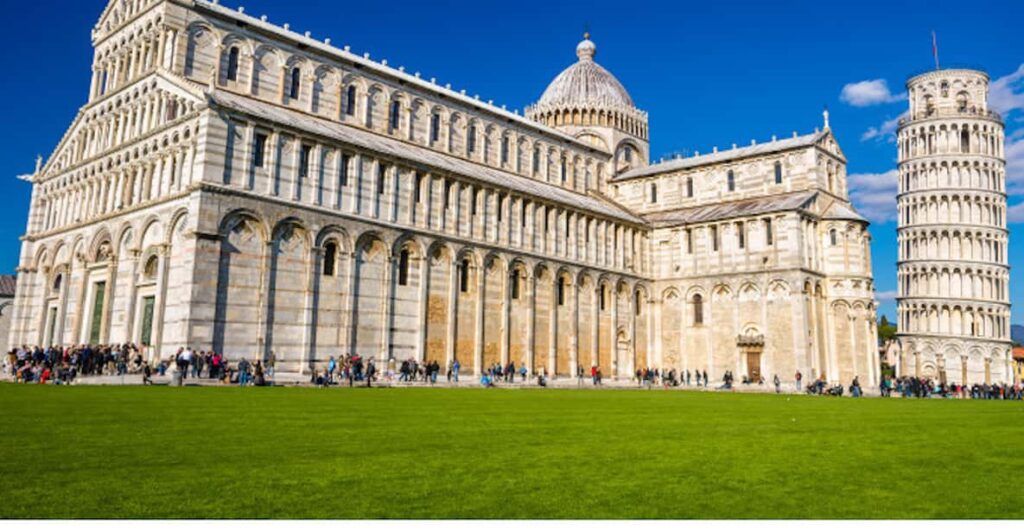
The Leaning Tower of Pisa is one of the most famous monuments in the world, admired for its dramatic tilt and long history. However, by the late 20th century, the tower was in serious danger of collapse. Engineers warned that if nothing was done, it could fall within decades. Saving the tower required one of the most complex and delicate engineering projects ever attempted. The successful stabilization of the Leaning Tower of Pisa stands today as a triumph of modern science and international cooperation.
The Growing Danger
Construction of the tower began in 1173, but it started leaning within five years due to weak soil and a shallow foundation. Over centuries, the lean slowly increased. By 1990, the tower was tilting at more than 5.5 degrees, and the top had shifted about 4.5 meters from its original vertical position. Cracks were forming, and engineers feared that the tower could suddenly collapse.
Because of the risk, the Italian government closed the tower to the public in 1990 and launched an international rescue project.
Forming an Expert Team
A committee of engineers, architects, and historians from around the world was created to study the tower. Their goal was not to make the tower perfectly upright, but to stabilize it while keeping its famous lean. This required extremely careful planning, as any mistake could have caused the tower to fall.
Temporary Safety Measures
Before permanent solutions could be applied, engineers installed steel cables anchored to the ground to hold the tower in place. They also placed lead counterweights—weighing nearly 900 tons—on the higher side of the base to reduce the stress on the foundation.
These measures were temporary but essential to prevent collapse during the restoration.
Soil Extraction Technique
The main stabilization method used was soil extraction, a slow and precise technique. Engineers carefully removed small amounts of soil from beneath the higher side of the tower. This allowed the tower to settle back slightly toward the center.
This process was done millimeter by millimeter over several years to avoid sudden movement.
Monitoring the Tower
Throughout the project, the tower was constantly monitored using lasers, sensors, and computer models. Engineers tracked even the smallest movements.
Results and Reopening
By 2001, the lean had been reduced by about 45 centimeters, and the tower was declared stable for at least 300 years. The tower was reopened to visitors.
A Global Engineering Triumph
The stabilization of the Leaning Tower of Pisa proved that even ancient monuments can be saved through modern engineering.
If you’d like, I can make this into a speech, project, or simpler version.