
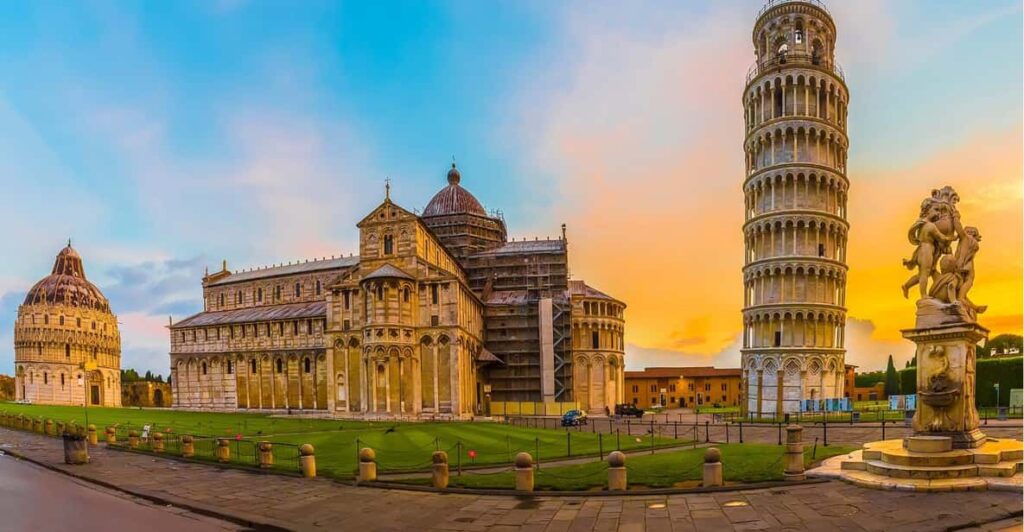
If you have ever seen photos of the Leaning Tower of Pisa, you have probably noticed a familiar and funny trend: people standing at a distance with their hands out, pretending to “hold up” the tower. This playful pose has become one of the most famous tourist traditions in the world. But why do people do it? What makes this simple photo idea so popular across cultures and generations?
The answer lies in a mix of optical illusion, human creativity, social media influence, and the desire to connect with history in a fun way. Let’s explore the real reasons behind this global travel tradition.
1. The Tower’s Lean Creates the Perfect Illusion
The Leaning Tower of Pisa is tilted at an angle of about four degrees, which makes it look as though it is about to fall. This dramatic slant invites imagination. From the right viewpoint, it appears possible for a person to physically support the tower.
This visual trick is called forced perspective. When you stand farther from the camera and the tower is closer to the camera, the two objects can appear to be the same size. Your hands then look as if they are touching the tower, even though it is many meters away.
This simple illusion is the foundation of the famous “holding the tower” pose.
2. A Natural Human Desire to Play
Tourists are often serious when visiting historic places, but Pisa encourages the opposite. The leaning shape feels playful, almost like the tower itself is joking with the world.
Pretending to hold it up makes people feel like they are part of the monument, not just spectators. It turns a quiet sightseeing moment into a fun memory.
3. A Universal Photo Language
You don’t need to speak Italian or know history to understand the joke. A photo of someone “holding” the tower is immediately clear and funny to anyone who sees it. This universal humor makes the pose popular with travelers from all over the world.
4. The Influence of Social Media
Social media platforms have turned this tradition into a viral travel challenge. People want to create content that is funny, recognizable, and shareable. A Pisa pose does exactly that.
5. A Way to Connect With History
Instead of just looking at the tower, tourists interact with it. This playful pose makes history feel alive and personal.
Conclusion
Tourists pretend to hold the Tower of Pisa because it is fun, creative, and meaningful. The tilt invites imagination, the illusion creates humor, and the photo becomes a shared symbol of travel joy. It’s proof that even the oldest monuments can inspire laughter in the modern world.
If you’d like, I can write:
- “Most Popular Pisa Photo Poses Ranked”
- “How to Take Perfect Perspective Photos”
- “Fun Travel Photo Ideas Around the World”