
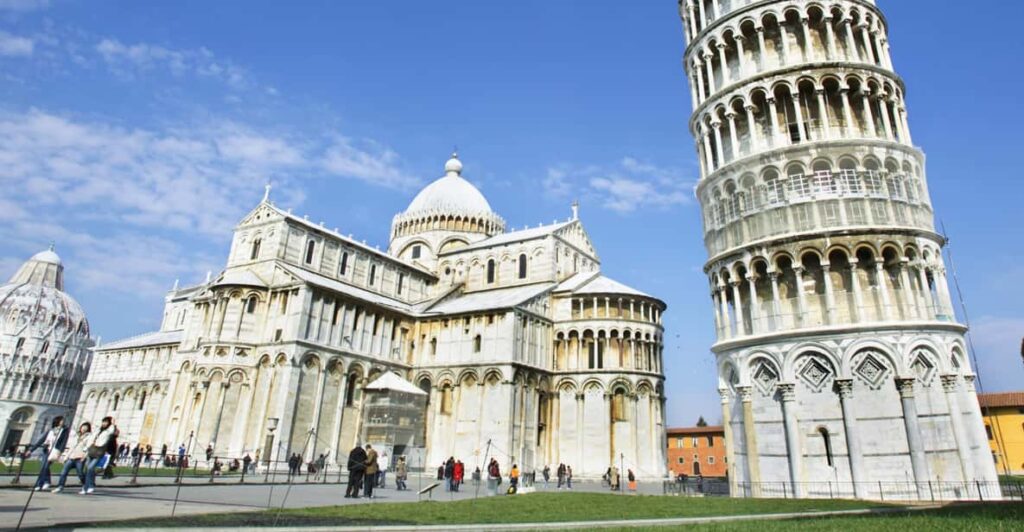
The Tower of Pisa stands as one of Italy’s greatest treasures and one of the most recognizable monuments in the world. With its graceful lean, gleaming white marble, and rich history, this iconic structure represents the heart of Italian art, culture, and resilience. Located in the beautiful city of Pisa in Tuscany, the tower is far more than a bell tower—it is a timeless symbol of creativity, determination, and the power of human imagination.
For more than eight centuries, the Tower of Pisa has fascinated visitors, historians, architects, and engineers alike. What began as a bold architectural vision evolved into a global symbol of beauty and imperfection. Today, the tower continues to attract millions of travelers each year, all eager to witness a structure that seems to defy gravity while standing proudly against the sky.
A Monument Born from Ambition
Construction of the Tower of Pisa began in 1173, during the height of Pisa’s power as a maritime republic. The city wanted to showcase its wealth, faith, and architectural excellence by creating a magnificent bell tower for the Cathedral of Santa Maria Assunta. This cathedral complex, located in the Piazza dei Miracoli (Square of Miracles), also includes the Baptistery and the Camposanto, forming one of the most beautiful religious sites in Europe.
The tower was designed in the Romanesque style and built from white and gray marble. It featured elegant arches, decorative columns, and intricate carvings. The original plan was for a tall, perfectly vertical structure that would reflect the strength and glory of Pisa.
However, fate had other ideas.
The Lean That Changed History
After only three levels were completed, builders noticed that the tower was beginning to lean. The cause was the soft, unstable soil beneath the foundation, made of clay, sand, and silt. The heavy marble structure was too much for the ground to support.
Construction was halted for nearly 100 years, allowing the soil to settle. When work resumed, architects attempted to correct the tilt by adjusting the upper floors. Instead, this created the tower’s iconic curved shape. Over time, the lean became more pronounced, turning a flaw into a defining feature.
A Masterpiece of Design
The Tower of Pisa stands approximately 56 meters tall and consists of eight levels, including the bell chamber at the top. Each level is decorated with elegant arches and columns that create harmony and balance. The white marble reflects sunlight beautifully, giving the tower a radiant appearance.
Inside, a spiral staircase with nearly 300 steps leads visitors to the summit. As you climb, you can feel the gentle tilt beneath your feet, making the experience thrilling and unforgettable. From the top, panoramic views of Pisa, the Arno River, and the rolling Tuscan countryside await.
Saving a World Treasure
By the 20th century, the tower’s lean had become dangerous, raising fears of collapse. In 1990, the tower was closed for restoration. Engineers from around the world worked together to stabilize the structure.
Through careful soil removal, foundation reinforcement, and weight adjustments, they successfully reduced the tilt and secured the tower for future generations.
A Symbol of Italian Spirit
The Tower of Pisa is linked to Galileo Galilei, who was born in the city. According to legend, he conducted gravity experiments from the tower.
A Timeless Legacy
Today, the Tower of Pisa is a UNESCO World Heritage Site and a true Italian treasure. Standing tall while leaning, it reminds us that even imperfections can become symbols of beauty, resilience, and hope.