
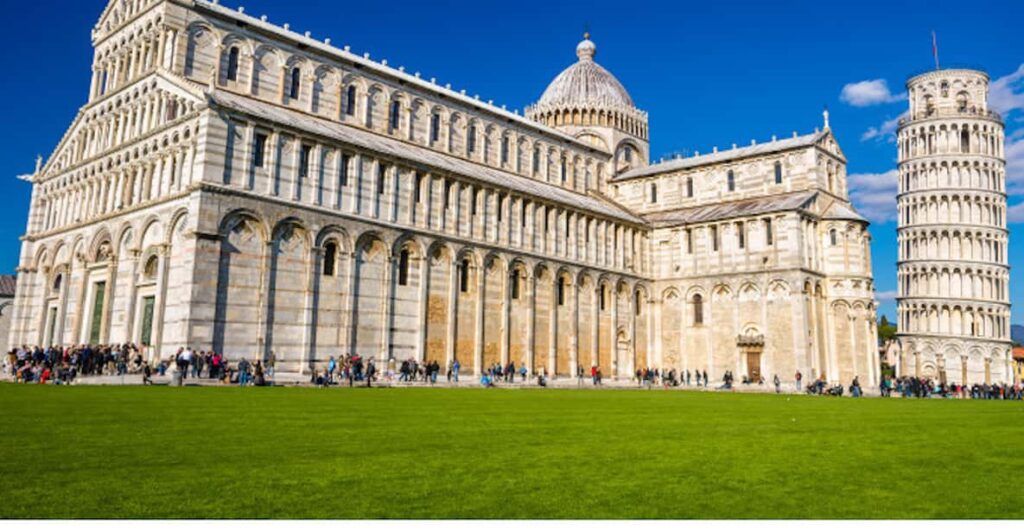
The Tower of Pisa is one of the most famous monuments in the world, instantly recognizable for its elegant lean and timeless beauty. Rising above the historic city of Pisa in Tuscany, Italy, this extraordinary structure is far more than a simple bell tower. It is a powerful symbol of human ambition, resilience, and creativity. For over eight centuries, the Tower of Pisa has captured the imagination of travelers, historians, architects, and dreamers from around the globe.
To “lean into history” at the Tower of Pisa is to step into a story shaped by faith, innovation, mistakes, and determination. What began as a bold architectural project turned into one of the world’s greatest wonders. Its famous tilt, once seen as a flaw, is now celebrated as a mark of uniqueness and charm.
The Birth of a Legend
Construction of the Tower of Pisa began in 1173 during the height of Pisa’s power as a maritime republic. The city sought to display its wealth and devotion through a magnificent religious complex, now known as the Piazza dei Miracoli, or Square of Miracles. The tower was designed to serve as the bell tower for the Cathedral of Santa Maria Assunta.
However, shortly after the first three levels were built, the tower began to lean due to the unstable, soft ground beneath it. This unexpected challenge forced builders to stop construction for nearly a century. When work resumed, architects attempted to correct the tilt by adjusting the upper floors, unintentionally creating the tower’s signature curve.
A Masterpiece of Romanesque Design
The Tower of Pisa is a stunning example of Romanesque architecture. Standing approximately 56 meters tall, it features eight levels decorated with graceful columns, arches, and intricate stonework. The white marble exterior reflects sunlight beautifully, giving the tower a glowing presence against the blue Tuscan sky.
Inside, a spiral staircase with nearly 300 steps winds upward to the bell chamber. As visitors climb, they feel the tilt beneath their feet, a sensation that makes the experience truly unforgettable. At the top, panoramic views of Pisa and the surrounding countryside offer a breathtaking reward.
The Famous Lean
The tower’s lean is its most defining feature. Originally caused by a poorly designed foundation, the tilt gradually worsened over centuries. By the late 20th century, the structure leaned at a dangerous angle, and experts feared it might collapse.
A massive restoration project was launched to stabilize the tower. Engineers carefully removed soil from beneath one side and reinforced the foundation. These efforts successfully reduced the tilt and ensured the tower’s safety for future generations. Today, the Tower of Pisa stands proudly, leaning just enough to remain its iconic self.
A Center of Culture and Science
Pisa is not only known for its tower but also for its contributions to learning and innovation. The city is the birthplace of Galileo Galilei, one of history’s greatest scientists. According to legend, Galileo conducted gravity experiments from the top of the tower, adding to its fame and mystery.
The tower stands among other remarkable structures in the Piazza dei Miracoli, including the Cathedral, Baptistery, and Camposanto. Together, they represent centuries of religious, artistic, and cultural achievement.
A Global Symbol
Today, millions of visitors travel to Pisa each year to see the tower. It has become a global symbol of Italy and a reminder that even imperfections can become legendary. Travelers pose for creative photos, explore the historic square, and immerse themselves in the city’s rich atmosphere.
A Timeless Journey
To lean into history at the Tower of Pisa is to connect with a story that spans centuries. It is a journey through art, science, faith, and human determination. Standing tall while leaning, the Tower of Pisa continues to inspire the world as a true wonder of history.
https://gyg.me/npbR57SMbook now