
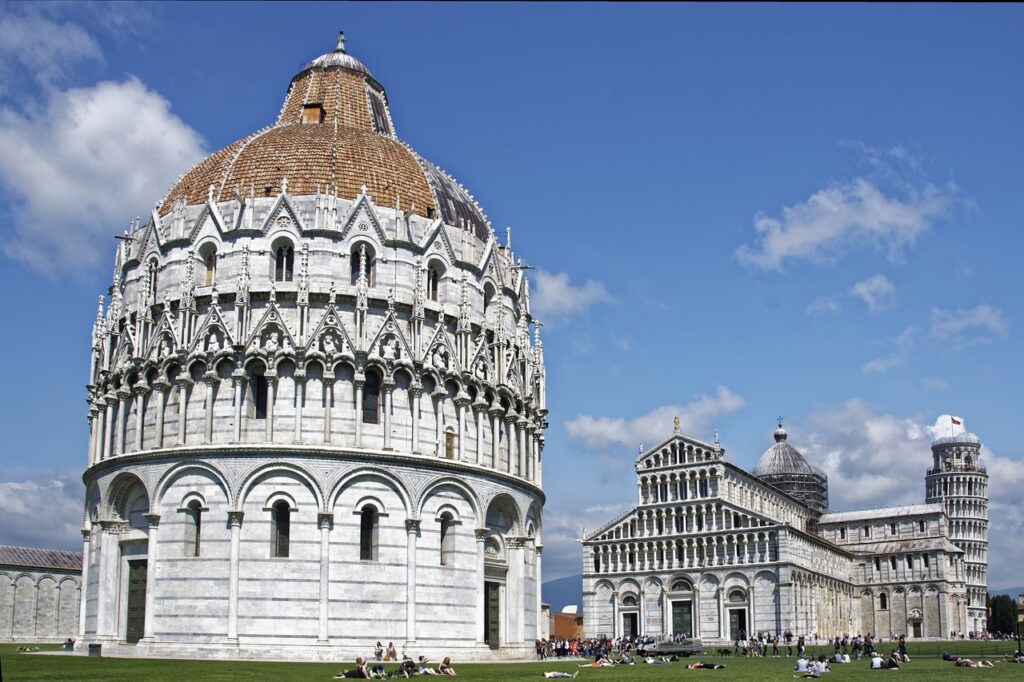
The Leaning Tower of Pisa is one of the most famous architectural monuments in the world. Located in the city of Pisa, Italy, the tower is best known for its unintended tilt, but its architectural design is equally remarkable. Built during the Middle Ages, the tower represents the beauty and technical skill of Romanesque architecture while also telling a story of human ambition, error, and creativity. The structure is not only a bell tower but also a masterpiece of medieval design that has fascinated architects and engineers for centuries.
Romanesque Architectural Style
The Leaning Tower of Pisa was built in the Romanesque style, which was popular in Europe between the 10th and 13th centuries. This style is known for its:
- Rounded arches
- Thick walls
- Decorative columns
- Symmetry and balance
The tower was designed to match the nearby Cathedral of Santa Maria Assunta and the Baptistery, forming a harmonious architectural complex in the Piazza dei Miracoli.
Exterior Design
The tower is made primarily from white and gray marble. Its cylindrical shape is divided into eight levels: the base, six colonnaded stories, and the bell chamber at the top.
Each level features a ring of arches supported by columns, giving the tower a light and elegant appearance despite its massive weight. The repetition of arches creates a sense of rhythm and vertical movement.
The Base
The base of the tower is solid and slightly wider than the upper floors. It contains blind arches and decorative patterns. The entrance doorway is richly carved, showing geometric and floral designs common in Romanesque art.
Interior Design
Inside, the tower is hollow and contains a spiral staircase with 294 steps that leads to the top. The hollow design reduces the overall weight of the structure.
The Bell Chamber
At the top is the bell chamber, added in the 14th century. It holds seven bells, each tuned to a different musical note.
Structural Features
The tower’s foundation is shallow and rests on weak soil. Builders attempted to correct the tilt by adjusting the height of the upper floors, creating a subtle curve.
Artistic Harmony
Despite its flaws, the tower remains a symbol of beauty, symmetry, and medieval craftsmanship.