
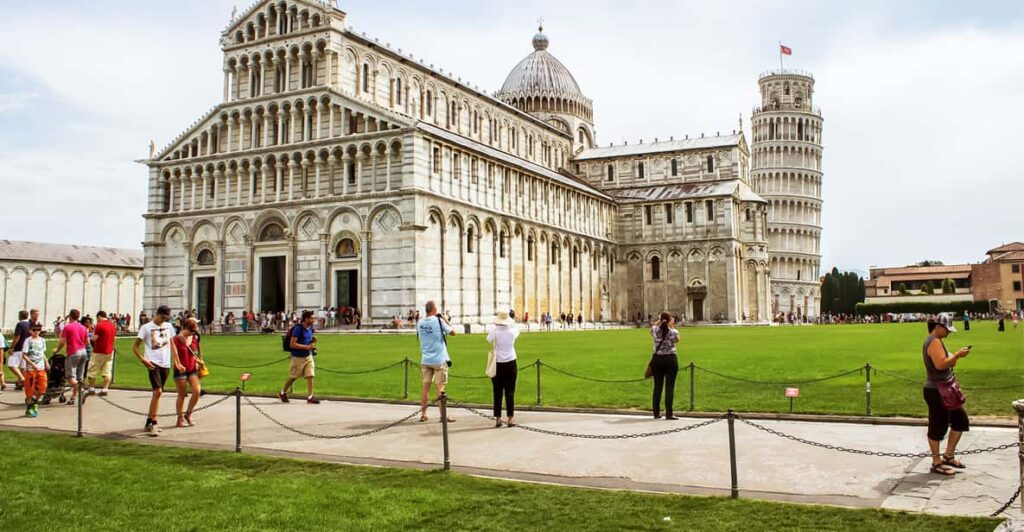
The Leaning Tower of Pisa is one of the most famous structures in the world, admired for its beauty and dramatic tilt. While many people focus on its height and angle, fewer consider an equally important detail: its weight. The enormous mass of the tower is one of the main reasons it began to lean and one of the biggest challenges engineers have faced in keeping it standing. Understanding the tower’s weight helps explain both its problems and its survival.
How Much Does the Tower Weigh?
The Leaning Tower of Pisa weighs approximately 14,500 metric tons. This incredible weight comes from the massive blocks of white and gray marble, limestone, and mortar used in its construction. In medieval times, moving and stacking such heavy stone without modern machinery was an extraordinary achievement.
Why Weight Matters
Weight is a critical factor in structural stability. When a building is too heavy for the ground beneath it, the soil compresses unevenly. In Pisa, the ground is made of soft clay, sand, and silt, which cannot support large loads well. As the tower’s weight pressed down, the soil on one side sank more than the other, causing the tower to tilt.
Distribution of Weight
The tower is hollow inside, with a spiral staircase. This reduces some of its weight, but the thick stone walls and heavy bells still make it extremely massive. Because of the tilt, the weight is unevenly distributed, placing more pressure on the lower side.
The Role of Gravity
Gravity constantly pulls the tower downward. The weight creates a force that increases the lean over time, a slow process called “creep.”
Counterweights
In the 20th century, engineers added lead counterweights to balance the tower and reduce stress on the foundation.
Engineering Balance
Despite its enormous weight, the tower’s center of mass still remains within its base, preventing collapse.
A Monument of Mass and Beauty
The weight of the Leaning Tower of Pisa is not just a number—it is a key part of its story.