
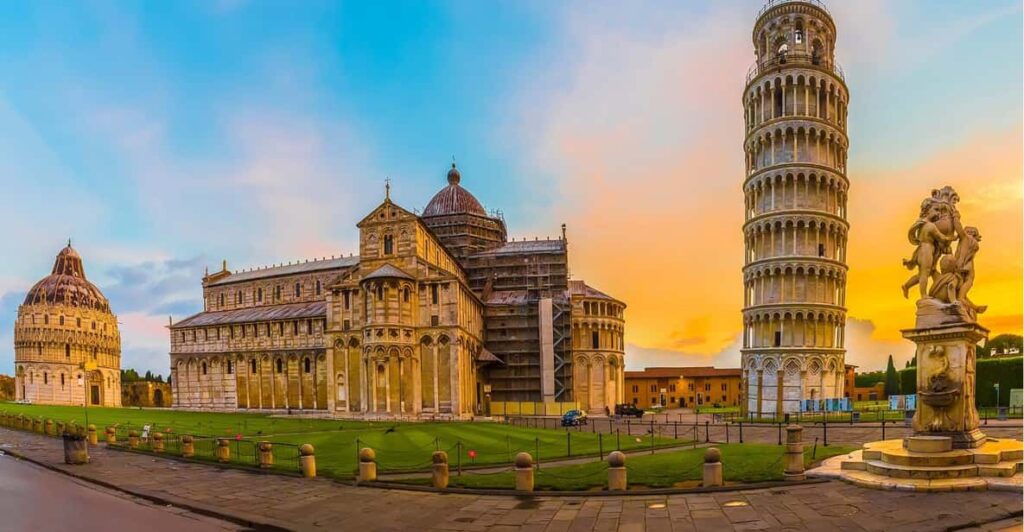
The Leaning Tower of Pisa is one of the most famous structures in the world. While most people recognize it for its dramatic tilt, fewer realize that its height is not the same on all sides. Because the tower leans, one side is slightly taller than the other. This unique feature makes the question “How tall is the Tower of Pisa?” more interesting than it first appears. The tower’s height, shape, and proportions reveal important details about medieval architecture, engineering challenges, and the long history behind this iconic monument.
The Official Height
The Leaning Tower of Pisa measures approximately:
- 56.67 meters (185.9 feet) on the higher side
- 55.86 meters (183.3 feet) on the lower side
This difference of about 81 centimeters (32 inches) exists because the tower tilts, making one side shorter than the other. When originally completed in 1372, the tower was slightly taller, but later stabilization efforts reduced its height by a small amount to improve safety.
Why the Height Is Uneven
The tower leans because the soil beneath it is soft and uneven. As one side of the foundation sank, the structure tilted. Over time, the upper floors were built taller on one side in an attempt to correct the lean. This caused a slight curve in the tower and added to the height difference.
Height Compared to Other Towers
Although the Leaning Tower of Pisa is famous, it is not the tallest tower in Italy or the world. Compared to modern skyscrapers, it is relatively short. However, in medieval times, a 56-meter tower was considered extremely tall and impressive.
Number of Floors and Steps
The tower has eight levels and 294 steps inside. Each level adds to its total height.
Visual Illusion
Because of the tilt, the tower often appears taller than it actually is.
Engineering and Measurement
Engineers regularly measure the tower’s height and lean using laser tools to ensure stability.
Cultural Impact
The tower’s height and lean have made it a global icon.
Conclusion
The Tower of Pisa is not just tall—it is uniquely tall on each side. Its height reflects centuries of history, design challenges, and human creativity.