
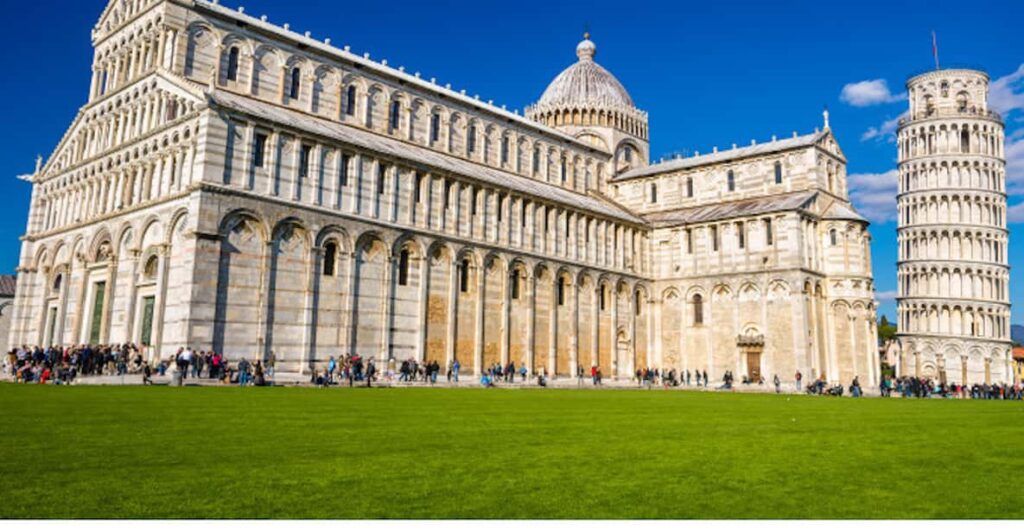
The Tower of Pisa is one of the most recognizable landmarks on Earth. With its graceful lean and gleaming white marble, this extraordinary structure has captured the imagination of people for more than eight centuries. Standing in the heart of Pisa, Italy, the tower is far more than just a bell tower—it is a symbol of beauty, resilience, and human creativity. To see the world-famous Tower of Pisa is to witness history, art, and engineering come together in a way that continues to amaze millions of visitors every year.
From first-time travelers to seasoned explorers, everyone feels a sense of wonder when they stand before this iconic monument. Its slight tilt, once considered a serious flaw, has become its greatest charm and a powerful reminder that even imperfections can lead to something extraordinary.
A Vision from the Middle Ages
Construction of the Tower of Pisa began in 1173, during a period when Pisa was a wealthy and powerful maritime republic. The city wanted to display its importance through a magnificent religious complex. The tower was designed as the bell tower for the Cathedral of Santa Maria Assunta, part of the stunning Piazza dei Miracoli, also known as the Square of Miracles.
Built from white and gray marble, the tower followed the Romanesque style, featuring rounded arches, decorative columns, and intricate stone details. It was meant to stand tall and straight, a proud symbol of Pisa’s faith and strength.
When the Lean Began
Shortly after the first three levels were completed, builders noticed that the tower was beginning to lean. The cause was the soft, unstable soil beneath its foundation, made up of sand, clay, and silt. The heavy marble structure could not be supported properly, causing one side to sink.
Construction was halted for nearly 100 years. This long pause allowed the ground to settle and may have saved the tower from collapse. When work resumed, architects tried to compensate for the tilt by adjusting the design, unintentionally giving the tower its unique curved shape.
A Masterpiece of Architecture
The Tower of Pisa stands about 56 meters tall and is composed of eight levels, including the bell chamber at the top. Each level is decorated with elegant columns and arches that reflect the Romanesque style. The marble exterior glows in the sunlight, making the tower shine against the blue Tuscan sky.
Inside, a spiral staircase with nearly 300 steps leads visitors to the top. As you climb, you can feel the tilt beneath your feet, creating a thrilling experience. At the summit, breathtaking views of Pisa, the Arno River, and the rolling Tuscan countryside await.
Engineering Against Time
Over centuries, the lean became more severe, raising fears of collapse. In the late 20th century, engineers launched a major restoration project to stabilize the structure. Between 1990 and 2001, soil was carefully removed from beneath the higher side, and the foundation was reinforced. This reduced the tilt and secured the tower for future generations.
Legends and Culture
The Tower of Pisa is linked to the famous scientist Galileo Galilei, who was born in the city. According to legend, he dropped objects from the tower to test theories about gravity.
A Global Icon
Today, the Tower of Pisa is a UNESCO World Heritage Site and one of the most visited landmarks in Europe. Seeing the world-famous Tower of Pisa is an unforgettable experience that connects visitors to centuries of history and wonder.