
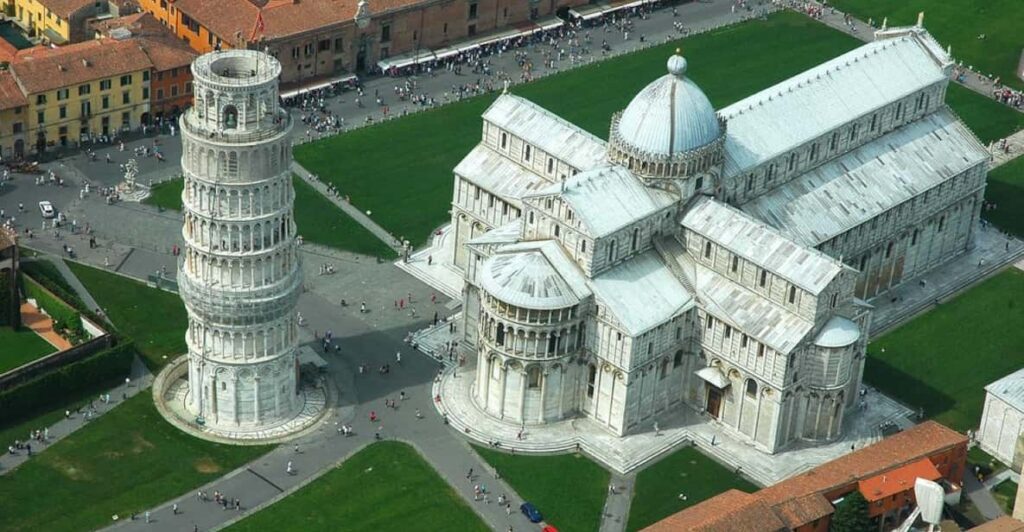
The Leaning Tower of Pisa is one of the most famous buildings in the world. For more than eight centuries, it has stood at a dramatic angle that makes it appear as though it could collapse at any moment. Yet, despite gravity, earthquakes, and unstable soil, the tower is still standing today. Many people wonder: why didn’t the Tower of Pisa fall? The answer lies in a remarkable combination of medieval luck, clever construction, natural soil behavior, and modern engineering.
A Dangerous Beginning
Construction of the tower began in 1173 as a bell tower for the Pisa Cathedral. The builders did not realize that the soil beneath the site was soft and uneven. It was made of clay, sand, and shells, which could not support heavy stone structures. The foundation was only three meters deep, far too shallow for a tower that would eventually weigh over 14,000 tons.
After just five years, the tower began to lean. This should have been the end of the project, but history took an unexpected turn.
The Lucky Construction Delays
One of the biggest reasons the tower did not fall was the long pauses in construction. Because of wars and financial problems, work stopped for almost 100 years. This allowed the soil beneath the tower to slowly settle and harden. If builders had continued quickly, the structure would likely have collapsed before it was finished.
The Curved Design
When construction resumed, builders tried to fix the lean by making the upper floors slightly taller on the sinking side. This created the tower’s famous curved shape. While this did not straighten the tower, it helped shift weight back toward the center, slowing the lean.
The Role of Gravity
As strange as it sounds, gravity also helps keep the tower standing. The tower’s center of mass still falls within its base, which prevents it from toppling over. As long as the center of gravity remains inside the foundation, the tower can stay upright—even while leaning.
Earthquake Protection
The soft soil beneath Pisa acts like a shock absorber. Instead of violently shaking during earthquakes, the ground absorbs the vibrations. This unique interaction between the soil and the structure has helped protect the tower from collapse.
Modern Engineering
In the 20th century, engineers stabilized the tower by removing soil from under the higher side and adding counterweights. These efforts reduced the tilt and ensured that the tower will remain standing for at least several centuries.
A Monument of Survival
The Tower of Pisa did not fall because of a rare balance of luck, nature, and human ingenuity. It stands today as a symbol of resilience and creativity.