
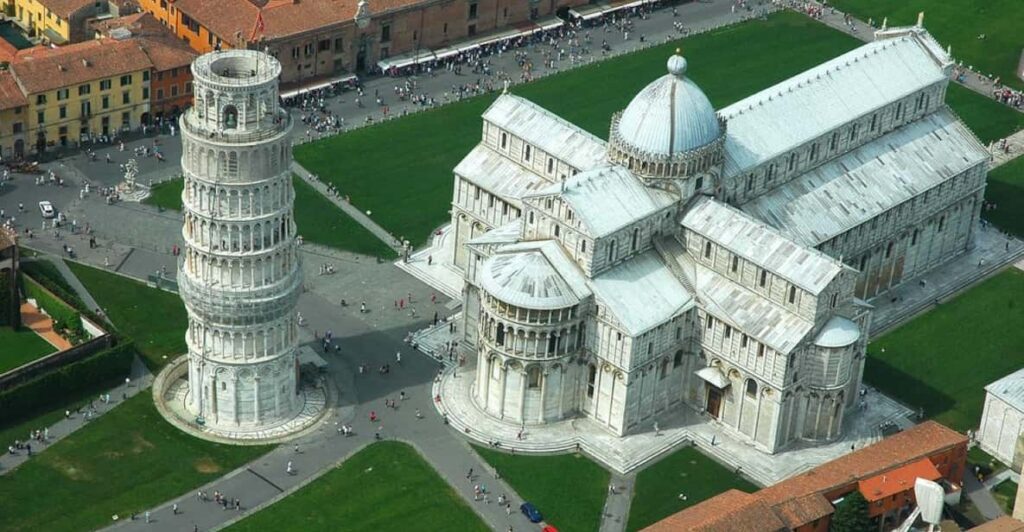
The Leaning Tower of Pisa is one of the most recognizable landmarks in the world. Its unusual tilt, elegant design, and centuries-old history have made it a powerful symbol not only of Italy but of global culture. Because of this, the tower has appeared countless times in movies, television, cartoons, advertisements, video games, and social media. Often, it is used as a visual shortcut to represent Italy, comedy, romance, or even disaster.
This article explores how the Tower of Pisa has been portrayed in popular media and why it continues to inspire filmmakers and artists around the world.
Why the Tower of Pisa Is Perfect for Media
The tower’s lean makes it instantly recognizable. Even a simple outline of the structure tells viewers, “This is Italy.” Its shape also suggests movement, danger, and humor, making it ideal for storytelling. Directors and artists use the tower to create drama, romance, or comedy in just a few seconds of screen time.
The Tower of Pisa in Movies
1. Romantic and Travel Films
In romantic and travel movies, the Tower of Pisa often appears as a symbol of adventure, beauty, and European charm. Characters are shown taking photos, laughing, or enjoying the scenery, helping audiences associate the tower with love and discovery.
2. Comedy Films
Many comedy films use the tower for visual jokes. Scenes often show characters pretending to push it, hold it up, or accidentally cause it to fall. The lean itself becomes part of the humor.
3. Action and Fantasy Films
In action movies and animated fantasies, the tower is sometimes shown in danger—falling, exploding, or being saved at the last moment. While unrealistic, these scenes add excitement and highlight the tower’s cultural importance.
Television and Cartoons
Cartoons and TV shows frequently exaggerate the tower’s tilt for fun. It may bend, bounce, or wobble, turning it into a playful character rather than a building.
Advertising and Commercials
Brands use the Tower of Pisa to represent Italy, travel, or luxury. A quick image of the tower instantly communicates style, culture, and history.
Video Games and Virtual Worlds
The tower appears in many video games as part of Italian-themed levels. Players can climb it, protect it, or use it as a landmark.
Social Media and Memes
The tower has become a meme star. From “holding it up” photos to humorous edits, it thrives in the digital age.
Conclusion
From Hollywood movies to internet memes, the Tower of Pisa remains a powerful cultural icon. Its presence in media proves that even an ancient monument can feel modern, fun, and timeless.
If you’d like, I can write:
- Top movies featuring Italian landmarks
- Famous monuments in pop culture
- How travel icons shape media storytelling