
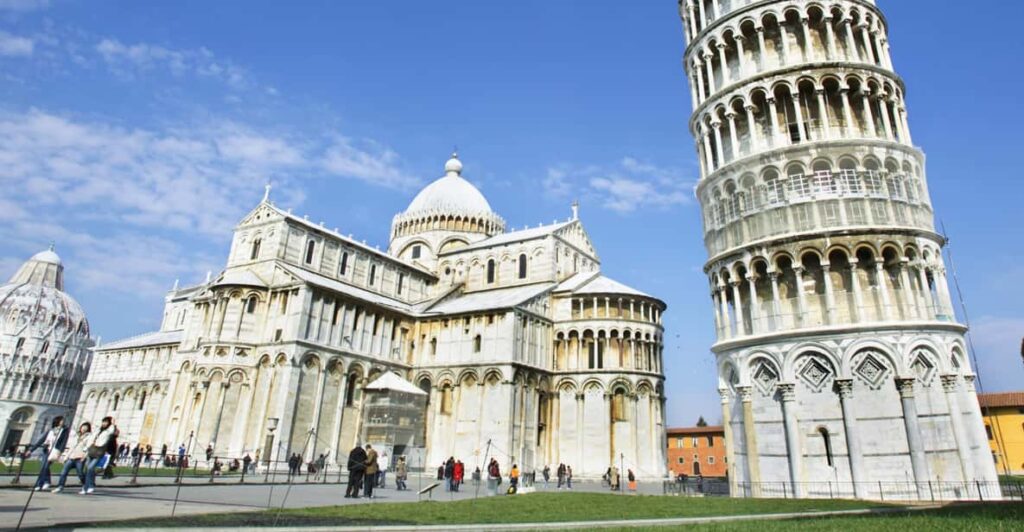
The Leaning Tower of Pisa is one of the most famous monuments in the world, instantly recognizable because of its dramatic tilt. While many people focus on its unusual shape, fewer know about the tower’s original purpose. The tower was never meant to be a tourist attraction or a symbol of engineering error. Instead, it was designed for a sacred role: to serve as the bell tower (campanile) for the Cathedral of Santa Maria Assunta in Pisa, Italy. Its purpose was deeply connected to religion, politics, culture, and civic pride in medieval Italy.
Religious Purpose: A Bell Tower for the Cathedral
The main purpose of the Tower of Pisa was to function as a bell tower for the cathedral located next to it. In medieval Christian cities, bells played a vital role in daily life. They were used to:
- Call people to prayer
- Mark the hours of the day
- Announce religious festivals
- Warn citizens of danger
- Celebrate important events
The tower was meant to hold large bells that would ring across the city of Pisa, reminding citizens of God’s presence and guiding the rhythm of daily life. From the top of the tower, the bells could be heard far beyond the city walls.
Part of the Piazza dei Miracoli Complex
The tower was not built alone. It was part of a grand religious complex called the Piazza dei Miracoli (Square of Miracles), which included:
- The Cathedral of Santa Maria Assunta
- The Baptistery of St. John
- The Monumental Cemetery (Camposanto)
- The Bell Tower (Leaning Tower)
Together, these buildings symbolized the journey of the Christian soul: baptism, worship, death, and eternal life. The tower’s role as a bell tower completed this spiritual design.
A Symbol of Pisa’s Power
When construction began in 1173, Pisa was one of the richest and most powerful maritime republics in Europe. The tower was also meant to show Pisa’s political power and wealth. The city wanted a structure that would rival those of other great Italian cities such as Florence and Venice.
By building a tall, beautiful marble tower, Pisa was announcing its importance to the world. The tower was not just religious—it was a statement of civic pride.
Architectural Purpose
The tower was designed in the Romanesque architectural style, using white marble, arches, and decorative columns. Its purpose was also artistic: to create a structure that was visually harmonious with the cathedral.
The tower’s design emphasized verticality, symbolizing a connection between heaven and earth. Bells ringing from the sky-like heights were believed to bring divine blessings to the people below.
Timekeeping and Community Life
Before modern clocks, bell towers were the main way people kept track of time. The Tower of Pisa helped regulate daily life. Its bells marked:
- Morning prayers
- Work hours
- Market times
- Curfews
In this way, the tower served the entire community, not just the church.
Military and Warning Role
Although not built as a fortress, the height of the tower also allowed it to be used as a watchtower. From the top, guards could see approaching ships or enemies. Bells could warn citizens in times of danger.
Conclusion
The original purpose of the Tower of Pisa was to serve as a bell tower—a sacred voice of the city calling people to worship, marking time, and symbolizing Pisa’s power. Though it became famous for leaning, its true meaning lies in its role as a spiritual and civic landmark that united the people of Pisa.