
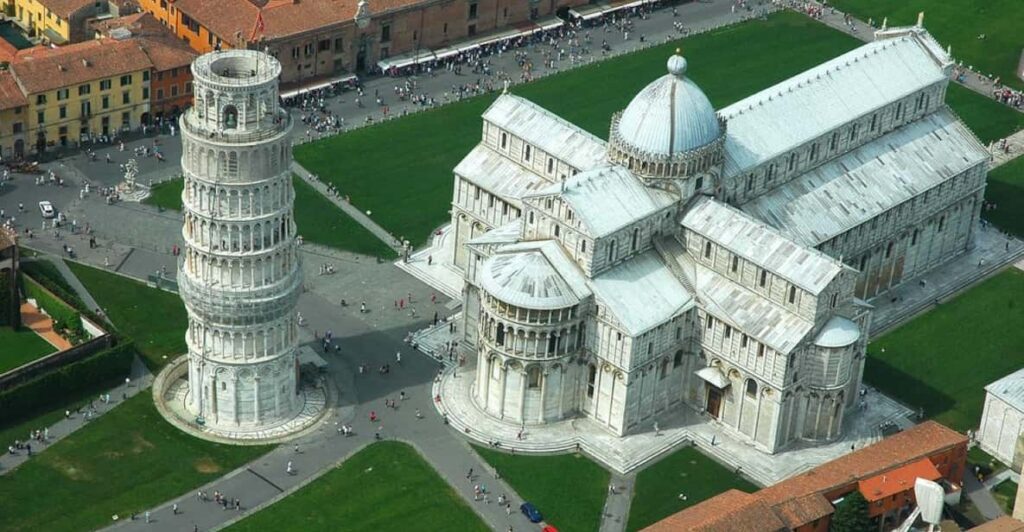
The Leaning Tower of Pisa has stood for more than 800 years, surviving wars, earthquakes, storms, and serious structural problems. Its dramatic tilt makes it look fragile, but modern science has proven that the tower is far stronger than it appears. Many people now ask an important question: How long will the Tower of Pisa last?
The answer from engineers and historians is hopeful. With continued care, monitoring, and maintenance, the tower is expected to remain standing for at least another 200 to 300 years—and possibly much longer.
Why the Tower Nearly Failed
The tower’s problems began at birth. Construction started in 1173, and the foundation was placed on soft soil made of clay and sand. This caused one side to sink, creating the lean. Over centuries, the tilt slowly increased, placing stress on the structure.
By the late 20th century, the lean became dangerous. Experts feared the tower might collapse if nothing was done.
The Stabilization Project
In 1990, the tower was closed to the public. An international team of engineers worked for over a decade to save it. They removed soil from beneath the higher side, allowing the tower to settle back slightly.
This reduced the lean and made the foundation stronger.
Modern Monitoring
Today, sensors inside the tower track every tiny movement. Engineers constantly check data to ensure stability.
What the Future Holds
Experts believe the tower is now stable for centuries. Regular maintenance will help it last even longer.
Conclusion
The Tower of Pisa is no longer in danger. With modern engineering and care, it will continue to inspire the world for hundreds of years to come.
If you’d like, I can write:
- How engineers monitor the tower
- The science of leaning buildings