
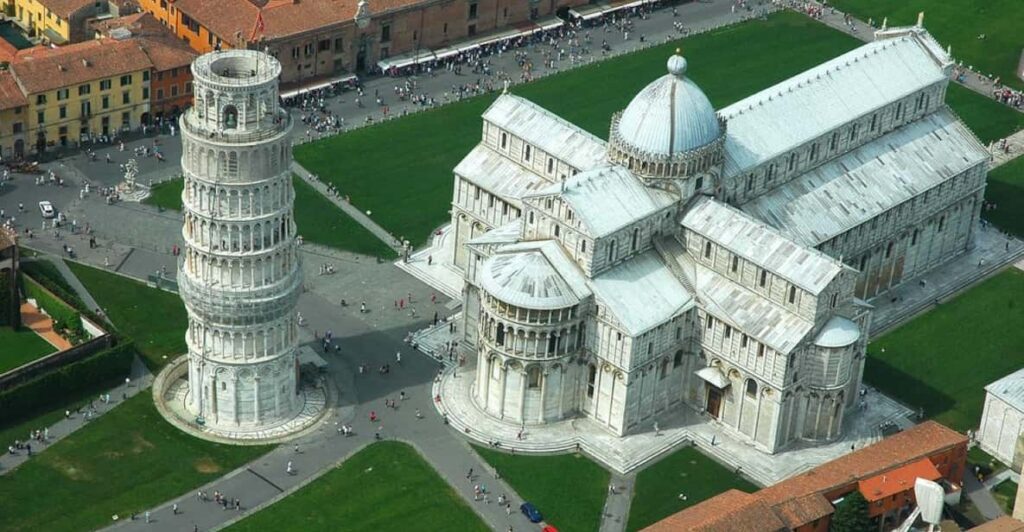
The Leaning Tower of Pisa is not only famous for its tilt but also for its beautiful Romanesque architectural style. Built during the Middle Ages, the tower is one of the finest examples of Romanesque design in Europe. Its elegant arches, decorative columns, and symmetrical patterns reflect a period when architecture focused on strength, harmony, and religious expression. Even though the tower leans, its artistic balance and classical beauty remain powerful symbols of medieval craftsmanship.
What Is Romanesque Architecture?
Romanesque architecture developed in Europe between the 10th and 12th centuries. It is known for its:
- Rounded arches
- Thick walls
- Strong pillars
- Decorative arcades
- Symmetry and rhythm
This style was inspired by ancient Roman buildings and was used mainly for churches and religious structures.
Romanesque Features of the Tower
The Tower of Pisa displays classic Romanesque features. Each of its six colonnaded levels is surrounded by a ring of rounded arches supported by slender columns. These repeating arches create a sense of movement and balance.
Use of Marble
The tower is built from white and gray marble, which enhances the beauty of the Romanesque design.
Decorative Harmony
The tower matches the nearby cathedral and baptistery, forming a unified Romanesque complex.
Symbolism
The upward design represents a spiritual connection between earth and heaven.
Artistic Legacy
The Romanesque style of the Tower of Pisa has influenced architecture for centuries.
Conclusion
The Leaning Tower of Pisa is a perfect blend of Romanesque art and medieval engineering.
If you’d like, I can simplify, make it academic, or convert it into a presentation.