
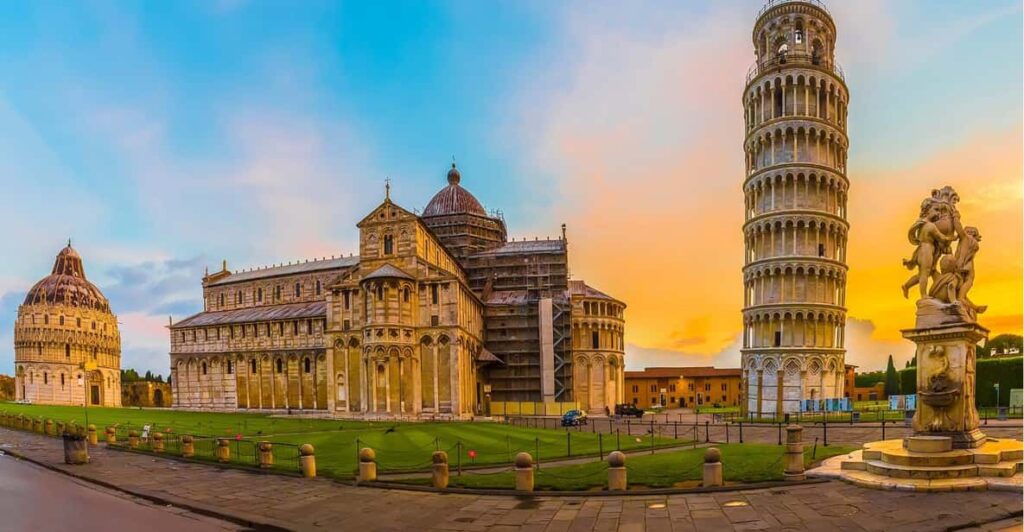
The Leaning Tower of Pisa is one of the most famous monuments in the world. While many people know it for its dramatic tilt, fewer understand the remarkable ancient engineering that allowed the tower to survive for over 800 years despite serious design challenges. Built in the Middle Ages, long before modern technology, the tower stands as a powerful example of both human error and human ingenuity.
Medieval Engineering Knowledge
When construction began in 1173, engineers did not have modern tools or an understanding of soil mechanics. They relied on experience, basic geometry, and manual labor. Pisa’s engineers believed that a shallow stone foundation would be sufficient. Unfortunately, they did not account for the weak soil beneath the site.
The Foundation Design
The tower’s foundation was only about three meters deep and built from stone and mortar. It was designed to support a straight, vertical structure. However, the ground was composed of clay, sand, and shells, which compressed unevenly.
Structural Adaptations
As the tower began to lean, builders made changes. They constructed upper floors taller on one side to balance the structure. This created the tower’s curved shape.
Materials and Craftsmanship
The tower was built using white and gray marble, limestone, and mortar. Skilled stone masons carved decorative arches and columns.
Spiral Staircase
Inside the tower is a spiral staircase with 294 steps. This hollow design reduced weight.
Ancient Problem-Solving
Builders halted construction for decades, allowing the soil to settle. This accidental decision saved the tower.
A Legacy of Engineering
The Tower of Pisa represents the limits and creativity of ancient engineering.
book now