
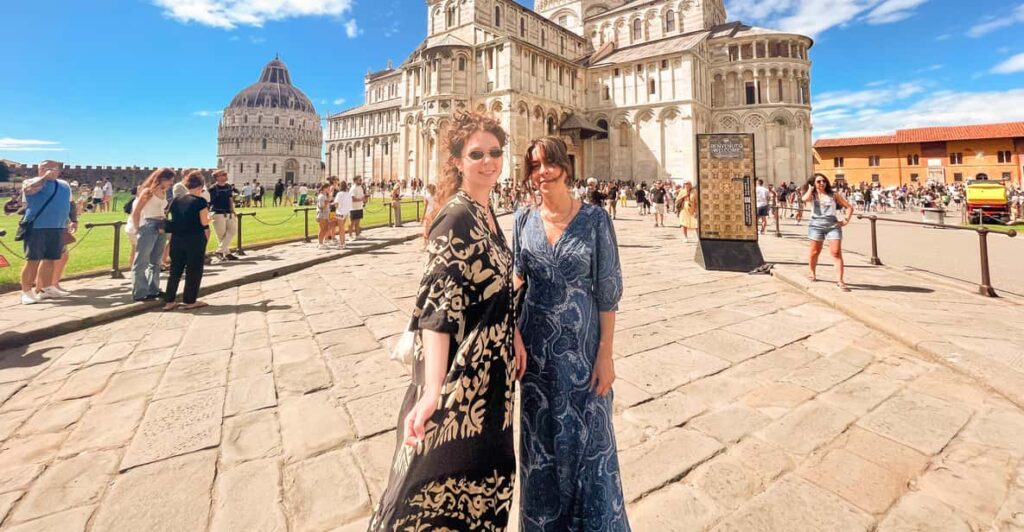
The Tower of Pisa is one of the most enchanting landmarks in the world, instantly recognizable for its graceful lean and timeless beauty. Rising above the historic city of Pisa in Tuscany, Italy, this extraordinary structure has fascinated travelers, historians, artists, and engineers for more than eight centuries. To experience the magic of the Tower of Pisa is to step into a living story of ambition, creativity, and resilience that continues to inspire people across the globe.
More than just a monument, the tower represents the heart of Pisa and the spirit of Italy. Its famous tilt, once considered a tragic mistake, has become a symbol of uniqueness and charm. Millions of visitors journey to Pisa every year, eager to see this wonder with their own eyes and feel the sense of history that surrounds it.
A Dream Born in the Middle Ages
Construction of the Tower of Pisa began in 1173, during a period when Pisa was one of Italy’s most powerful maritime republics. The city wanted a grand bell tower to stand beside its cathedral in the Piazza dei Miracoli, or Square of Miracles. Built from white and gray marble, the tower was meant to showcase Pisa’s wealth, devotion, and architectural brilliance.
However, only a few years into construction, the structure began to sink on one side. The soft soil beneath the foundation could not support the weight of the stone. Builders paused work for nearly a century, hoping the ground would settle. When construction resumed, architects tried to correct the tilt by making the upper floors slightly taller on one side, unknowingly giving the tower its iconic curved form.
Architectural Beauty and Design
The Tower of Pisa stands about 56 meters tall and features eight levels, including the bell chamber at the top. Each level is decorated with graceful columns and arches, reflecting the Romanesque style that was popular in medieval Italy. The tower’s white marble surface glows in the Tuscan sunlight, making it appear almost magical against the blue sky.
Inside, a spiral staircase of nearly 300 steps leads to the top. As you climb, you can feel the tilt beneath your feet, creating a unique sensation that adds to the experience. Reaching the summit offers breathtaking views of Pisa’s red rooftops, green countryside, and the winding Arno River.
The Mystery of the Lean
The tower’s lean is what makes it famous around the world. Originally caused by a poorly designed foundation, the tilt gradually increased over centuries. At one point, the tower leaned at a dangerous angle, and experts feared it might collapse.
In the late 20th century, a major restoration project was launched to save the tower. Engineers from around the world worked together to stabilize it by removing soil and reinforcing the foundation. These efforts successfully reduced the lean and ensured the tower’s safety for future generations.
A Place of Legend and Learning
The Tower of Pisa is closely associated with Galileo Galilei, the famous scientist born in the city. According to legend, he conducted experiments from the top of the tower to study gravity. While the story is debated, it adds to the tower’s magical reputation and highlights Pisa’s role in scientific discovery.
The Piazza dei Miracoli
The tower is part of the Piazza dei Miracoli, a UNESCO World Heritage Site that includes the Cathedral, Baptistery, and Camposanto. Together, these monuments represent centuries of religious devotion and artistic excellence.
A Timeless Experience
Experiencing the magic of the Tower of Pisa is more than sightseeing—it is a journey through history, beauty, and human resilience. Standing tall while leaning, the Tower of Pisa remains one of the world’s greatest wonders and a must-see destination for every traveler.