February 12, 2026

Why was the Leaning Tower of Pisa built

How to Visit the Leaning Tower of Pisa

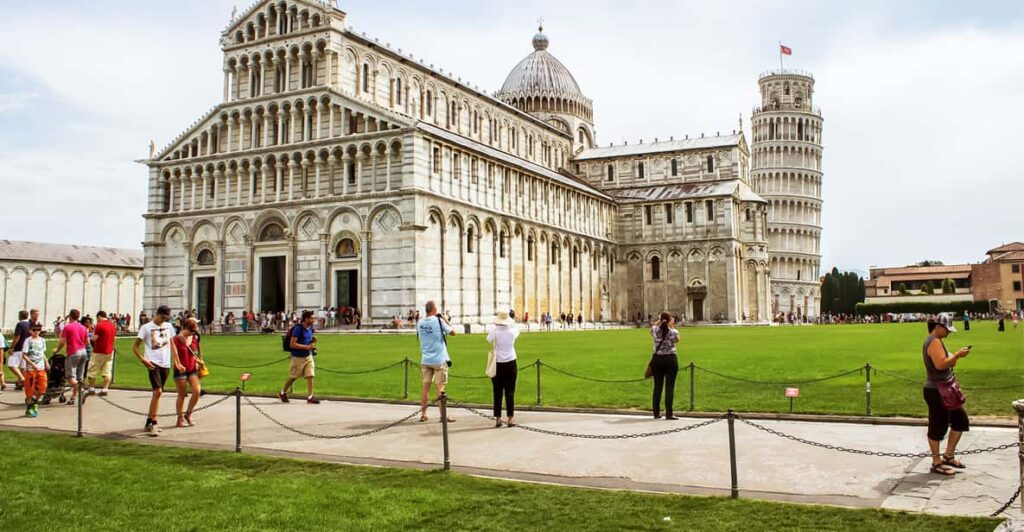
Visiting the Leaning Tower of Pisa is a dream for travelers from around the world. Its iconic tilt, medieval architecture, and stunning setting in the Piazza dei Miracoli make it one of Italy’s must-see attractions. Knowing how to plan your visit — from tickets and timing to transport and on-site tips — will help you make the most of this unforgettable experience. 1. Where It Is and Why It’s Worth Visiting The Leaning Tower is located in Pisa, Tuscany, Italy, in the beautiful Piazza del Duomo (also called Piazza dei Miracoli). This square also includes the Pisa Cathedral, Baptistery, and Camposanto Monumentale — all part of a UNESCO World Heritage Site. Most visitors begin at the Piazza and take in the stunning Romanesque architecture before climbing the tower itself. If you’re interested in medieval history, art, or simply spectacular photo opportunities, this site is a highlight of any Italy trip. 2. Getting There By Train Pisa is very well connected by train. The main station, Pisa Centrale, is about a 20-minute walk from the Piazza del Duomo. Pisa is easy to reach from major cities like Florence, Rome, and Milan. Many travelers use Pisa as a day trip from Florence because trains run frequently and the walk to the tower is pleasant. By Bus or Shuttle Local buses and the Pisa Mover shuttle service (from the airport to the city center) also connect to the Piazza. This is useful if you’re flying into Pisa International Airport. By Car If you’re driving, there is parking near the square (e.g., along Via Cammeo). Be aware that central Pisa has ZTL (limited traffic zones), so check signage and guidance from your hotel before entering. 3. Tickets and Timing Advance Booking is Essential Climbing the Leaning Tower requires a timed ticket — these are limited and often sell out, especially from April to October and during holidays. It’s highly recommended to book your tickets in advance online to secure your preferred time. Tickets can be booked through the official website or reputable resellers. A standard ticket includes a 30-minute time slot to climb the tower’s steps and enter. Ticket Prices & Options Booking Tips On-site Ticket Purchase You can buy tickets at the ticket office near the Piazza if you haven’t booked ahead, but availability is not guaranteed — especially in peak season. Arrive early in the morning if you want to try this. 4. Climbing the Tower What to Expect Once inside, you’ll climb a spiral staircase of marble steps that curve with the tower’s tilt. The climb itself usually takes about 15–20 minutes one way, with another 15–20 at the top to enjoy panoramic views. Physical Requirements Bags and Security Large bags and backpacks are not permitted up the stairs. Most visitors drop them off in a free locker or storage area nearby before their climb. Photography Photography is allowed both inside and from the top, with stunning views over Pisa and the Tuscan countryside. Flash and tripods may be limited in certain interior areas for safety reasons. 5. Best Time to Visit Seasonal Considerations Daily Timing 6. Exploring the Piazza dei Miracoli Your visit shouldn’t stop at the tower itself. The Piazza dei Miracoli is full of architectural and cultural treasures: You can easily spend 2–4 hours exploring the full complex. 7. Practical Visitor Tips Wear Comfortable Shoes The climb involves nearly 300 steps. Comfortable, non-slip shoes make the ascent safer and more enjoyable. Arrive Early Plan to arrive at the Piazza at least 30–45 minutes before your ticket time to manage security checks and bag storage. Food and Drink The area around the square has cafés and gelato shops, but prices can be higher than elsewhere in Pisa. Walking into town or near the Arno River can offer more local and affordable options. Accessibility Because of the steep, uneven stairs, the tower climb is not accessible for wheelchair users. Other monuments like the cathedral and museums have improved access with ramps — and free entry for visitors with disabilities plus a companion can be arranged with advance notice. 8. What If Tickets Are Sold Out? If the tower climb tickets are sold out: Conclusion Visiting the Leaning Tower of Pisa is an unforgettable travel experience that combines history, architecture, and stunning views. With careful planning — especially around tickets, timing, and crowd avoidance — your visit can go smoothly and be truly memorable. Whether you climb the stairs or enjoy the view from below, the Tower and its surrounding Piazza dei Miracoli are among Italy’s most treasured landmarks. If you want, I can also tailor this into a step-by-step itinerary or a cost estimate to help plan your trip! book now

How to Visit the Leaning Tower of Pisa Read More »
Tower of pisa history

Where Is the Tower of Pisa Located?

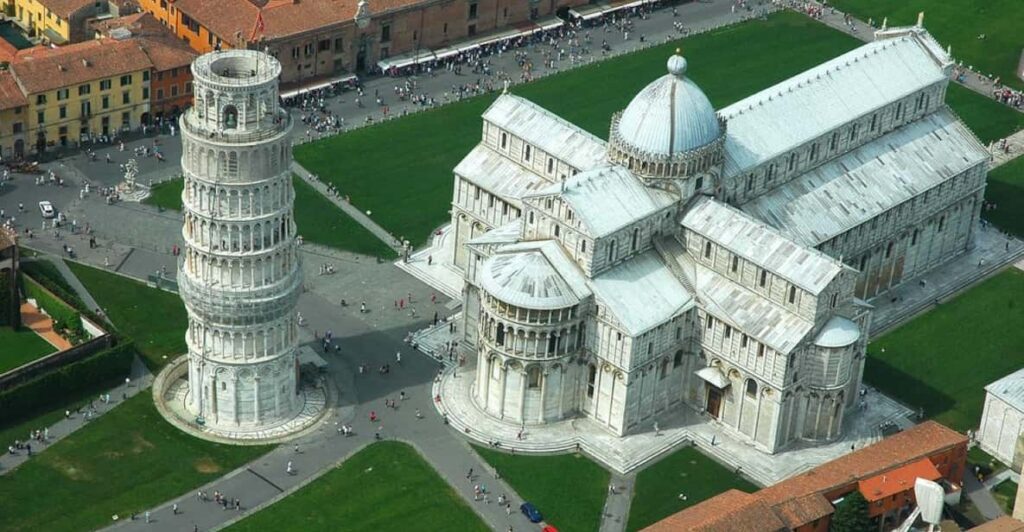
The Leaning Tower of Pisa is one of the most famous landmarks in the world. While most people recognize it by its dramatic tilt, fewer understand the importance of where it is located. The tower’s location is not just a point on a map—it is deeply connected to its history, architecture, cultural meaning, and even the reason it leans. The Tower of Pisa stands in a place rich with religious, artistic, and political significance, making its setting as important as the structure itself. The City of Pisa The Tower of Pisa is located in the city of Pisa, in the Tuscany region of central Italy. Pisa lies near the Arno River, about 10 kilometers from the Ligurian Sea. During the Middle Ages, Pisa was a powerful maritime republic, controlling trade routes across the Mediterranean Sea. Its wealth and influence allowed it to build grand monuments, including the cathedral complex that features the famous tower. The Piazza dei Miracoli The tower stands in the Piazza dei Miracoli, also known as the Square of Miracles. This large, grassy square is one of the most important religious sites in Europe. It contains four major monuments: Together, these buildings represent the journey of the Christian soul—baptism, worship, death, and eternal life. Geographic Influence on the Lean The location played a major role in the tower’s tilt. The ground beneath the square is made of soft clay, sand, and shells, formed by ancient coastal deposits. This unstable soil caused the tower to sink unevenly, leading to its famous lean. Cultural Importance The Piazza dei Miracoli is a UNESCO World Heritage Site, attracting millions of visitors each year. A Global Symbol Though located in a small Italian city, the Tower of Pisa is known worldwide. Conclusion The Tower of Pisa’s location is not accidental—it is the heart of its story. From the rich city of Pisa to the soft soil of the Piazza dei Miracoli, the place shaped the tower’s destiny. If you’d like, I can make this shorter, more academic, or into a presentation. book now

Where Is the Tower of Pisa Located? Read More »

towerofpisa

How Engineers Saved the Tower of Pisa

The Leaning Tower of Pisa is one of the most famous monuments in the world, known for its dramatic tilt and long history. By the late 20th century, however, the tower was in serious danger of collapse. Its lean had become so extreme that experts feared it could fall within a few decades. Saving the tower required an international team of engineers, scientists, and historians who used innovative methods to stabilize the structure without destroying its iconic character. The successful rescue of the Tower of Pisa is now considered one of the greatest achievements in modern engineering. The Growing Risk Construction of the tower began in 1173, and it started leaning only five years later because it was built on soft, unstable soil. Over the centuries, the tilt slowly increased. By 1990, the tower leaned at more than 5.5 degrees, and the top was displaced by about 4.5 meters from the center. Cracks were forming in the stone, and the foundation was under dangerous stress. The Italian government closed the tower to the public and began searching for a solution. Forming a Global Engineering Team In 1990, an international committee of engineers, geologists, and architects was formed. Their challenge was unique: save the tower while keeping its famous lean. Straightening it completely would destroy its identity, but doing nothing would allow it to collapse. The goal was to reduce the tilt slightly and ensure long-term stability. Temporary Safety Measures Before permanent work could begin, engineers had to prevent sudden movement. They installed steel cables attached to anchors in the ground to hold the tower in place. They also placed nearly 900 tons of lead counterweights on the higher side of the base. These counterweights helped balance the tower and reduced stress on the sinking side. The Soil Extraction Solution The key method used to save the tower was called soil extraction. Engineers carefully drilled small holes beneath the higher side of the foundation and removed tiny amounts of soil. As the soil was taken away, the tower slowly shifted back toward the center. This process was done extremely slowly—sometimes only a few millimeters at a time—to avoid cracking or collapse. Constant Monitoring Throughout the project, the tower was monitored using laser sensors, tilt meters, and computer models. Engineers could see even the smallest movement in real time, allowing them to stop work immediately if anything became dangerous. Reopening the Tower After 11 years of work, the lean was reduced by about 45 centimeters. In 2001, the tower was declared stable for at least 300 years and reopened to the public. A Lasting Achievement The rescue of the Leaning Tower of Pisa proved that modern engineering can preserve even the most fragile historical monuments. Today, the tower stands safely—still leaning, but no longer in danger. If you’d like, I can turn this into a speech, presentation, or simpler version. book now

How Engineers Saved the Tower of Pisa Read More »

Leaning Tower & Cathedral Skip-the-Line Entry Ticket

Romanesque Style in the Tower of Pisa

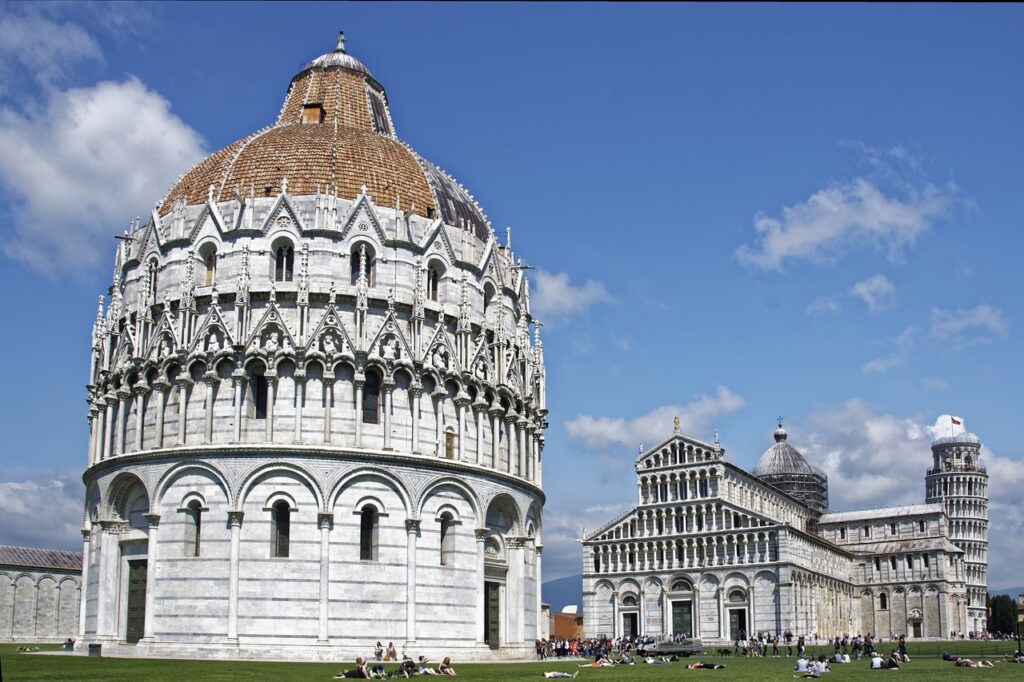
The Leaning Tower of Pisa is not only famous for its tilt but also for its beautiful Romanesque architectural style. Built during the Middle Ages, the tower is one of the finest examples of Romanesque design in Europe. Its elegant arches, decorative columns, and symmetrical patterns reflect a period when architecture focused on strength, harmony, and religious expression. Even though the tower leans, its artistic balance and classical beauty remain powerful symbols of medieval craftsmanship. What Is Romanesque Architecture? Romanesque architecture developed in Europe between the 10th and 12th centuries. It is known for its: This style was inspired by ancient Roman buildings and was used mainly for churches and religious structures. Romanesque Features of the Tower The Tower of Pisa displays classic Romanesque features. Each of its six colonnaded levels is surrounded by a ring of rounded arches supported by slender columns. These repeating arches create a sense of movement and balance. Use of Marble The tower is built from white and gray marble, which enhances the beauty of the Romanesque design. Decorative Harmony The tower matches the nearby cathedral and baptistery, forming a unified Romanesque complex. Symbolism The upward design represents a spiritual connection between earth and heaven. Artistic Legacy The Romanesque style of the Tower of Pisa has influenced architecture for centuries. Conclusion The Leaning Tower of Pisa is a perfect blend of Romanesque art and medieval engineering. If you’d like, I can simplify, make it academic, or convert it into a presentation. book now

Romanesque Style in the Tower of Pisa Read More »

popular questions

Structural Design of the Tower of Pisa

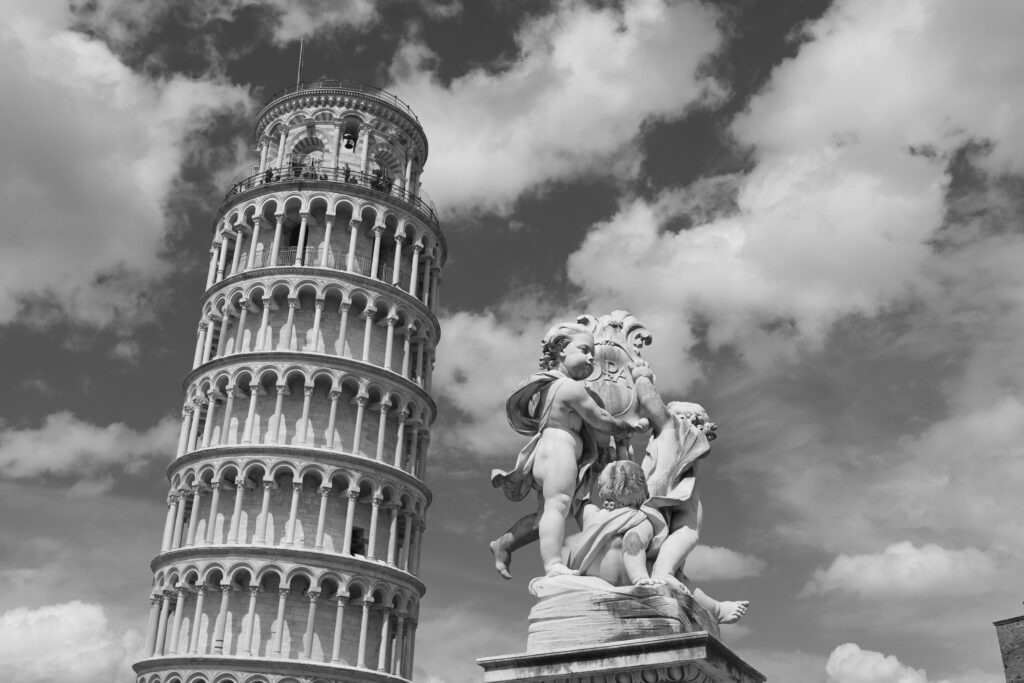
The Leaning Tower of Pisa is one of the most famous structures in the world, admired not only for its dramatic tilt but also for its remarkable structural design. Built in the Middle Ages as a bell tower for the Pisa Cathedral, the tower represents a blend of artistic beauty and engineering challenge. Although its lean was unintentional, the structural system of the tower has allowed it to survive for more than eight centuries. Its design shows how medieval builders combined strength, symmetry, and creativity—sometimes through trial and error. Overall Structure The tower is a cylindrical, hollow stone structure with a height of about 56 meters. It is divided into eight levels: a solid base, six colonnaded floors, and a bell chamber at the top. Each level is surrounded by arches supported by marble columns, giving the tower a light appearance despite its heavy mass. Foundation System The foundation is shallow, only about three meters deep, and rests on soft soil made of clay, sand, and shells. While this was a design flaw, the wide circular base helped spread the tower’s weight across a larger area. Wall Thickness and Materials The lower walls are extremely thick, gradually becoming thinner toward the top. This helps distribute weight downward. The tower is built mainly from marble and limestone, bonded with lime mortar. Hollow Core and Staircase Inside, the tower is hollow, with a spiral staircase of 294 steps. This reduces weight and allows visitors to reach the top. Arches and Columns The repeating arches and columns help distribute loads evenly and reduce stress points. The Bell Chamber The top chamber holds seven bronze bells. It is slightly offset to reduce stress from the lean. Load Distribution and Balance Despite its tilt, the tower’s center of mass remains within its base, which prevents collapse. Modern Reinforcement Engineers have stabilized the tower using cables, counterweights, and soil extraction. Conclusion The structural design of the Tower of Pisa is a masterpiece of endurance. What began as an error has become one of the most studied structures in the world. If you’d like, I can make this more technical, simpler, or convert it into a presentation. book now

Structural Design of the Tower of Pisa Read More »